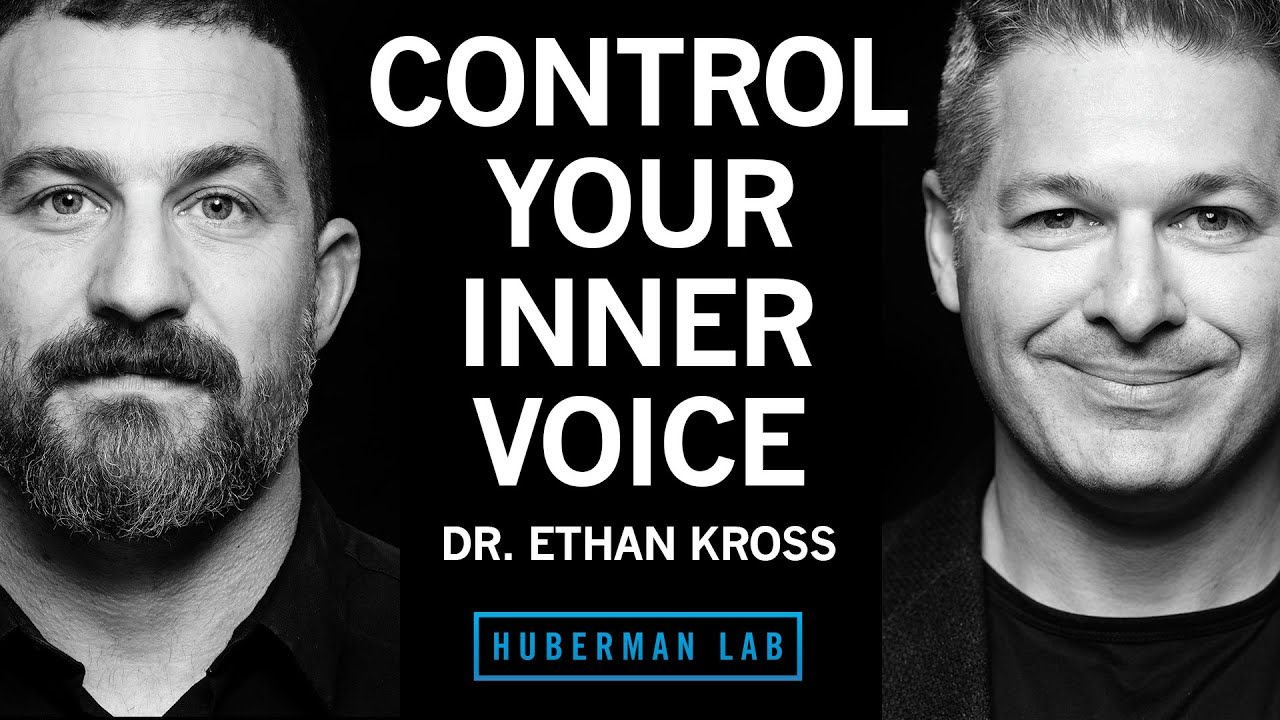
Our inner voice—those silent conversations we have daily—play a crucial role in shaping our emotions and motivations. In a recent episode of the Huberman Lab Podcast, Dr. Andrew Huberman dives into this fascinating topic with Dr. Ethan Kross, a leading expert in the psychology of self-control and emotion regulation.
Right from the start, the discussion challenges a common notion: the inner voice is overwhelmingly negative. Instead, Kross proposes that it is a versatile tool, functioning as a type of psychological Swiss army knife. This inner dialogue, which he dubs ‘chatter’, has both positive and negative aspects.
The conversation reveals how mental chatter can become intrusive, especially during stress, and may lead to mental health issues when not managed properly. However, it also can be channeled to enhance performance and emotional resilience. For example, while repetitive negative thoughts might cause anxiety, redirecting those thoughts through structured writing, like the Pennebaker writing method, introduces clarity and order, leading to a calmer state of mind.
The episode also highlights practical strategies to control inner chatter. Temporal distancing, a mental technique where you project how you’ll feel about a current issue in the future, helps defuse immediate emotional reactions. Combining such cognitive tools with physical activity can further ameliorate negative introspection, transforming it into a catalyst for problem-solving and creativity.
Dr. Huberman and Dr. Kross extensively explore how technology plays a dual role. While digital platforms can exacerbate negative inner voices by reducing the time for natural emotional decay, they also offer new forms of emotional support and community. Ultimately, understanding and harnessing our inner voice can lead to healthier, more fulfilling lives, enhancing both mental health and personal resilience.
No related products found.
welcome to the huberman Lab podcast
where we discuss science and
science-based tools for everyday
[Music]
life I’m Andrew huberman and I’m a
professor of neurobiology and
Opthalmology at Stanford school of
medicine and I’m wearing these red lens
wind down Roa glasses because we are
recording this late at night which is
unusual for us and bright light in
particular short wavelength bright light
in the blue and green part of the
spectrum quashes melatonin and it makes
it hard to sleep and I want to sleep
tonight these red lens glasses filter
out the green and blue short wavelengths
that would otherwise disrupt my sleep my
guest today is Dr Ethan cross Dr Ethan
cross is a professor of psychology at
the University of Michigan and the
director of the emotion and self-control
laboratory he is also the author of the
bestselling book chatter the voice in
our head and how to harness it today’s
discussion is a really special one
because we discuss something that each
and all of us have which is a voice in
our head that is our voice and that
voice can range from encouraging to
discouraging it can be repetitive in
ways that can be very intrusive and it
has a profound effect on our emotional
state our confidence our levels of
anxiety and indeed what we are capable
of achieving in life Dr Ethan cross’s
laboratory has done groundbreaking
research to understand what is the
origin of this voice in our heads and
can and should we control it and indeed
the answer is yes today’s discussion
gets into many things that people
struggle with and many things that you
can do to improve your life such as how
to regulate the chatter in your head how
to overcome ruminations and intrusive
thoughts and we also discuss what to do
with your actual voice for instance data
pointing to the fact that venting your
negative emotions to others is actually
bad it tends to amplify bad emotions we
talk about that research we also talk
about other forms of outward speech and
inward speech that inner voice that you
can partake in in order to improve your
emotional state and shift your emotional
state so today’s discussion really
centers around common questions and
common scenarios and common challenges
that everybody grapples with and of
course we all have a voice in our head
today you’re going to learn to listen to
it to regulate it and indeed to steer it
in the direction of mental health
physical health and performance I’m also
excited to tell you that Dr Ethan cross
soon has another book coming out
entitled shift managing your emotions so
they don’t manage you and I tremendously
enjoyed chatter his first book and I
very much look forward to reading shift
when it comes out we provide links to
the work in Dr Ethan cross’s laboratory
as well as links to his previous and
forthcoming book in the show note
captions before you begin I’d like to
emphasize that this podcast is separate
from my teaching and research roles at
Stanford it is however part of my desire
and effort to bring zero cost to
Consumer information about science and
science related tools to the general
public in keeping with that theme I’d
like to thank the sponsors of today’s
podcast our first sponsor is
expressvpn expressvpn is a virtual
private Network that keeps your data
secure and private it does that by
routing your internet activity through
their servers and encrypting it so that
no one can see or sell your data now I’m
personally familiar with the effects of
not securing my data well enough several
years ago I had one of my bank accounts
hacked and it was a terrible amount of
work to try and have that reversed and
the account secured so after that
happened I talked to my friends in the
tech community and they told me that
even though you may think your internet
connection is secure often times it is
not especially if you’re using Wi-Fi
networks such as those on planes in
hotels at coffee shops and other public
areas in fact even when you’re on the
internet at home your data may not be as
secure as you think the great thing
about expressvpn is that I don’t even
notice that it’s running since the
connection it provides is so fast I have
it on my computer and on my phone and I
just keep it on whenever I’m connected
to the internet if you want to start
protecting your internet activity using
expr VPN you can go to expressvpn.com
huberman and you can get an extra 3
months free again that’s
expressvpn.com
huberman to get an extra 3 months free
today’s episode is also brought To Us by
eight sleep eight sleep makes Smart
mattress covers with cooling Heating and
sleep tracking capacity one of the best
ways to ensure that you get a great
night’s sleep every single night is to
control the temperature of your sleeping
environment and that’s because in order
to fall and stay St deeply asleep your
body temperature actually has to drop by
about 1 to 3° and in order to wake up
feeling refreshed and energized your
body temperature actually has to
increase by about 1 to 3° eight sleep
makes it easy to control the temperature
of your sleeping environment by allowing
you to program the temperature of your
mattress cover at the beginning middle
and end of the night I’ve been sleeping
on an eight Sleep mattress cover for
nearly 4 years now and it has completely
improve the quality of my sleep eight
sleep has now launched their newest
generation pod cover the Pod 4 ultra the
Pod 4 ultra has improved cooling and
heating capacity higher Fidelity sleep
tracking technology and even has snoring
detection that will automatically lift
your head a few degrees to improve your
air flow and stop your snoring if you’d
like to try an eights Sleep mattress
cover go to 8sleep.com
huberman to access their Black Friday
offer right now with this Black Friday
discount you can save up to $600 off on
their pod 4 ultra this is eight8 sleep’s
biggest sale of the year eight sleep
currently ships to the USA Canada the UK
select country in the EU and Australia
again that’s 8sleep.com
huberman and now for my discussion with
Dr Ethan cross Dr Ethan cross welcome
great to be here right before we went
hot mics as they say uh we were talking
about interrupting one another um and
the fact that you’re from New York I’m
going to try not to interrupt you
because the audience doesn’t like that
however I am very interested in what um
you’re going to tell us about emotion
regulation but especially this thing
that you call chatter the voice in our
heads and prior to learning about your
work I always thought that chatter and
the voice in our heads was you know
overwhelmingly negative that’s what we
hear how do you combat that negative
voice in one’s head but you have some
very interesting ideas about the utility
of chatter like maybe how it even arose
and what it’s for so maybe we start
there yeah so I think this is a a great
question because um the inner voice is
something that we carry with us wherever
go but we don’t tend to learn what it is
right and actually sometimes I I get up
there and speak to people and
um they often wonder like what is a
purported serious scientist doing
talking about a squishy topic like the
voice inside our heads and it turns out
that this is a remarkable tool of the
human mind so when I use the term inner
voice when I’m talking about is our
ability to silently use language to
reflect on things in our lives and it
turns out that’s a type of Swiss army
knife that we possess it lets us do many
different things so just from the
outset let me distinguish chatter from
other inner voice operations I think of
chatter as a dark side of the inner
voice and we’ll get to that in a little
bit but having the ability to silently
use language that is a boon to The Human
Condition so I’ll give you a couple of
benefits that it serves what’s your
favorite sport sports team um the Harlem
Globe Trotters because they’re
undefeated as I understand oh yeah best
record in in any sport I don’t think
they’ve ever lost a game did they ever
play against other teams the the
Washington generals okay sorry for the
Washington generals um so if you were to
go to a uh game and root for them what
would you say um go Globe Trotters go
Globe TRS okay can you repeat that
phrase silently three times in your head
right now
yes okay you you’ve just used your inner
voice so your inner voice is part of
what we call our verbal working memory
system basic system of the human mind
that lets us do something that I think
is both extraordinary but totally
ordinary also your verbal working memory
system it’s a mouthful lets you keep
information active for short periods of
time so before we had cell phones how
did you memorize phone numbers like what
would you do repeated in your head yeah
and it had sort of a song to it yeah
right I can remember my childhood phone
number still even though that number is
long since long since gone I mean the
whole area codee’s gone in fact really
well it the number is probably still
there but under a different area code I
know because I try calling it every once
interesting well it’s funny when I when
I uh go through this content I give
talks or workshops I often say
20951 repeat that in your head three
times that’s my childhood phone number
I’m like go give it a shot give them a
call so for all I know that person may
be getting lots of phone calls it’s not
it’s not my phone number um but that’s
your verbal working memory system you go
to the grocery store and you try to
remember what you supposed to get most
people don’t do that out loud like oh
crap what was I supposed to get milk
cheese eggs repeat that silently in your
head so that’s one thing your inner
voice allows you to do keep information
active verbal information your inner
voice also helps you Sim and plan so
before presentations or interviews a lot
of people report going over what they’re
going to say before that event do you
ever ever do this yeah I mean my mode of
preparation for things like solo
podcasts and talks is um it’s not
scripted out line by line in advance but
I have a structure in my mind and it’s
more like remembering the first line of
each paragraph in my head and then the
rest just kind of falls out yeah we have
a very similar similar style I will I
will bullet out what the key ideas are
and as long as I could bullet that out I
am good to go but I will also rehearse
those bullets in my head AB BC D so uh
that’s you using your inner voice as
well now before a big presentation like
a live event I will go over the opening
to my presentation and sometimes just
carry that dialogue through when I’m
going for a walk around the hotel before
the event may I ask about the walk um
when I prepare for Live Events or solo
podcasts and long before I was involved
in either of those activities um for
lectures of any kind or classroom
discussions where I had to stand up in
front of the class I would find that
walking and listening to a song would
maybe simultaneously maybe separately
would dramatically shape the kind of
cadence and energy of the delivery of
the the talk yeah I love the fact that
you brought up songs there so if you
want to take a little detour here um so
in in in my new book shift we talk about
or I talk about how the different
shifters that exist to push your
emotions around and sensation sensory
experiences are one powerful and I would
argue often overlooked modality for
shifting our emotions so if you ask
people why do you listen to music what
do you think most people say it makes me
feel good feel right it’s about emotions
feel good so one study the the number
was around like 95 96% of participants
who were asked said exactly gave the
answer that you just gave but then if
you look at in other studies hey the
last time you felt anxious or angry or
sad what did you do to push your
emotions around the number of people who
report using music to modulate their
experience drops way down 10 to
30% music is a a really powerful tool
for modulating our emotions I actually
um uh an unintentional parenting victory
for me was when my youngest daughter was
around five or six and I was coaching
soccer I lived for these soccer games on
the weekend I wasn’t one of these
overbearing coaches who would you know
go crazy on the sidelines it was just
such joy to just watch these these kids
play and typically my daughter was was
really excited to go to the game but one
morning she was just like not into it at
all she was bum like she was bummed out
it was bumming me out I was you know
catching her emotions we can talk about
emotional contagion later and um got
into the car and it just so happened
that my my cell phone was connected and
the next song on the playlist happened
to be Journeys Don’t Stop Believing so
you know the song I presume uh don’t
judge me for having this on my playlist
please the song comes on and you know I
start jamming out to it you know singing
out loud like an embarrassing dad and
then I look in the back seat and I find
her bopping her head and then the chorus
comes we get really excited and then I
pull up to the soccer field and she just
bursts out of the car and is like
invigorated that is the power of music
to impact us so I will often also have
songs on prior to Big talks that I’m I’m
getting ready to you know get in that
mental frame of mind and I don’t think
it’s a coincidence that many athletes do
this as well they’ve stumbled onto this
tool that is quite powerful for pointing
our emotional experience or our
emotional trajectory in the direction we
wanted to to point so it’s interesting I
I was thinking about music in reference
to um shifting emotion as you just gave
an example of you know feeling like a
motivated and then your daughter’s
motivated by the yeah don’t stop right
yeah okay I’m not going to sing it going
we’ll do it together we not do that
someone will cut the clip and they’ll
run it out they’ll spool it out and then
no I have a truly terrible singing voice
but um I Wonder has the study ever been
done or something similar to this where
um people who are feeling pretty good or
very good are exposed to sadder music
and vice versa people are feeling sad
exposed to um to sort of um ecstatic
music or or positive lyrics um because
I’ve often wondered whether or not
humans like or
dislike when things or people try and
shift their state you I know in myself
when you know I’m like feeling upset
about something I don’t want to feel
upset I don’t think anyone wants to feel
upset
but if I hear a song there’s like that’s
positive there’s there’s a moment where
I’m like I can feel it kind of pulling
on me and you sort of know like I could
follow that trajectory and probably get
out of this and sometimes one does and
sometimes one doesn’t you know we’re and
this gets to I think a more fundamental
issue which is why I’m asking uh which
is are we supposed to feel our emotions
as a way to you know sort of dissolve
them when we don’t want them kind of the
cathartic approach or with listening to
sad music when we’re sad just amplify
the sadness these are great questions
and um I have a couple of they touch on
a couple of amazingly important issues
that we need to get into so let’s just
do them serially so number one has the
the study been done where you expose
people to different kinds of emot um
music sad
versus arousing you know happy music do
you see that push people’s emotions
around yes in fact sensory tools like
music or visual images are one of the
most powerful tools that we have in our
Arsenal for pushing people’s emotions
around in the context of experiments so
we want to induce a particular kind of
state we can play certain kinds of music
or show people images that are designed
to elicit positive or um negative
emotional experiences so images being
another sensory modality Vision so so
that’s number one number two there’s
this very interesting phenomenon where
when we are in a particular emotional
state let’s say we’re feeling sad we
often don’t reflex L seek out the happy
music we don’t go to Journey instead we
go to Adele right we’re going to Chicago
I’m giving you my age bracket here right
like the music that has sad associations
for me so there’s this mood
congruency if I’m feeling a certain way
I’m going to go deeper into that state
and have the music facilitate me why on
Earth would we do that are we all
masochistic do we just want to feel even
worse this gets at I think a critically
important point that is not always
talked about which is all emotions are
functional when they’re experiencing the
right proportions not too intensely and
not too long so sadness as an example is
an emotion we experience when we’ve
experienced some loss that we can’t we
can’t Rectify right away like something
has happened and you can’t fix that so
you’ve lost someone and so what does
this emotion do well it it it hijacks
the way we are thinking feeling and our
bodies are responding so it motivates us
to introspect to turn our attention
inward to reflect on this situation to
now try to make sense of it right
something really important in my life
has happen I now have to change the way
I’m thinking about my life so I can find
meaning and move
on my physiology is slowing down so I
can engage in that slow introspection
but what’s also really interesting about
sadness is it’s also impacting my facial
display giving a sign to all of the
people in my environment to say hey
maybe we should check up on that person
that guy cuz he looks like he’s on his
own in a corner right so can you detect
when someone is sad if you see like a
sad facial expression yes um when I used
to teach these summer courses at Cold
Spring Harbor in Northshore of Long
Island that students would come in from
all over the world and I’ve been there
it’s a great
Sumer camp for scientist Al Laboratories
all year and um my I eventually was
director of a course there and my
co-director and I used to have this um
debrief at the end of the first day or
two where we would talk to one another
and we would you know go over the list
of names and we’d say um and she was
remarkably good at this just uh
extraordinary like a superpower at
saying you know I think everyone’s
settling in well but I noticed that so
and so was kind of like might not be
adjusted to the lag or might not be
acclimating so well it’s a very
tight-knit group and the course is quite
long for a course like that but it’s
important that everybody kind of feel
engaged early on yeah um and people have
a tendency to dominate in those
intellectually you know competitive
environments and and she could just
pinpoint who it was that was feeling a
little bit outside the group we knew how
to amarate that really quickly and from
her I learned a bit of how to recognize
the signs and it was rarely
um just facial expression included that
and some other cues that she just seemed
to have a unconscious or conscious
genius around um so uh for me I learned
some of that from her I like to think I
got better at it but I think some people
are are just extraordinarily good at
that detection and it enhances social
interactions and so some people are
really good at detecting it others are
really good at displaying it I’m going
to go back to my my my daughter so you
know if something happens where she
feels sad she
exhibits this exaggerated
response like she’ll stick out her lower
lip and even if I’m kind of upset at her
like it is amazing the power that that
has on me I have over it is so so
beautifully manipulative manipulative
you know no man manipulative and um it
it’s it’s a testament to the power that
these displays can have on us so I want
to go back to one other um question you
raised in your last comment and we’ll go
back to the inner voice and its
functionality um you raised the question
about being shifted by others other
people and perhaps either just our
surroundings music or spaces sometimes
you don’t want to have your emotions be
shifted and in fact when other people
try to do that it can elicit what we
call reactants like you get defensive
because I don’t want you pushing me in
the particular direction I think that’s
a really important point that we need to
be aware of as people living and working
in these social environments where we’re
often well-intentioned
but sometimes our well-intentioned
behaviors can backfire and so there’s
this this beautiful research which shows
that if you see someone suffering and
you volunteer to help them and they
haven’t asked you to help them that can
blow up in your face because that what a
does is it often communicates to people
that you are thinking that they’re not
capable of handling their own
circumstances and most of us like we’re
motivated to think that we’re capable of
handling ourselves and so there are
still ways you can help people in those
circumstances it’s called providing
invisible support which involves
providing support to the person who can
genuinely benefit from it but not
shining a spotlight on the fact that
that is what you are doing so how might
this transpire there’s some really
simple things you could do so let’s say
my wife is um really overwhelmed with
stuff and she hasn’t asked me for help
but I know she is at her Wits End work
and kids and other kinds of stuff that
are on her plate I can I can proactively
do things to lessen her burden if it’s
her turn to pick up the dry cleaning and
the groceries I’m doing that voluntarily
I’m I’m doing that and I’m not coming
home and saying hey sweetie look what I
did today I did all these things you
know can I have a pad on my back that’s
not what we’re talking about it’s about
your group your your your lab is working
under a deadline right to submit a Grant
application and they don’t have time to
eat and you proactively have pizza
delivered to the lab it’s those little
things that can help give you two more
examples let’s say that um someone on
your team is really struggling with
their
their ability to translate their work
for for popular audiences and that’s
something they’re motivated to do really
important skill for scientist to be able
to translate what they do for others to
consume before you pull them aside and
say Hey you know I notice that you’re
stumbling on a few different issues and
here are a couple of things I think you
can do better before you do that direct
intervention you might have a team
meeting where you share out best
practices hey what are the two things
that I’ve learned that really have
benefited my ability to communicate with
different audiences what you’re doing
there is you’re getting people the the
resources they can benefit from but
you’re not shining a spotlight on the
fact that you are directing it to them
so it’s kind of a back doorway of of
helping or of Shifting the last uh the
last tool I’ll mention brings it back to
sensation one of the most powerful ways
we can shift other people is is through
touch tactile sensation um you know
what’s the first thing that you do with
a child to suo them when they are
born hold them hold them skin- to-
skinin contact I remember uh both times
my my kids were born it was like you
know I want to get in on that like you
know cuz my wife got first first dibs
with with both of our daughters like I
want some of that you know skin- to-
skinin contact uh that doesn’t end after
we leave the womb the the comfort that
we experience the release of stress
fighting chemicals that occurs when
affectionate Embraces are registered uh
that continues throughout the lifespan
so if my daughters who don’t
particularly like Dad to volunteer
advice to them on most things nowadays
uh if I know they’re having a bad day
like I’ll go over and you know I’ll rub
their back in a totally UNC creepy way
that is an important caveat we should
give to everyone who’s listening what
we’re talking about here is affectionate
but not creepy or unwanted touch it is
touch that is mutually desired and there
is some research which shows actually
that when it is not desired you don’t
get these benefits and in fact you get
the opposite Plus usually like lawsuits
as well yeah sure no I I um I
definitely believe that as a primate
species which we are we are old Old
World primates um
I think they call it allopathic grooming
like you’ll see these images of these
monkeys and lots of different species of
of primates um you know just sitting
nearby one another where one just has
its even just its um I said its hand yes
it’s PAW it’s hand it’s PAW on the on
the one next to it and they’ll just sit
like that for long periods of time yeah
and then sometimes they’re doing like an
active grooming of of removing you know
parasite this is very important in in uh
primate world uh as we know but you know
grooming and and and you know picking
and these kinds of things you see it in
couples it’s actually can be kind of
endearing I suppose at its extremes it’s
kind of gross but you know it’s it’s
rather endearing to see um somebody kind
like remove a piece of lint off somebody
somebody you know their partner’s uh
jacket or you know just or even just
touch that is it’s not doesn’t look like
it’s geared towards any specific outcome
yeah right it’s uh and it doesn’t
necessarily appear romantic or that it’s
grooming so maybe the lint example isn’t
the best one but where you just see
people that are just like actually on
the flight down this morning cuz I had
to fly in early it was I was sitting on
the aisle seat in the middle was a a boy
he was probably 14 15 and his mom was at
the window seat and I went up to uh to
use the restroom came back and he had
fallen asleep on his mom’s shoulder and
I I took a look it was a very endearing
moment and then when we landed I said
you know the ability to sleep anywhere
as a superpower and he said I I learned
it from my dad he said and it was a
moment where I just thought it was just
a very pleasant thing to see them in
this touch on on the plane he clearly
felt comfortable enough to do that
remember thinking like yeah humans were
a lot like the we’re a lot like the
other primates yeah there’s there’s a
beauty to it and you know it is it is a
tool it is one kind of shifter that has
to be obviously used in the appropriate
context all of our sensory modalities
are powerful tools for I would argue
relatively effortlessly shifting our
emotions and I think that’s really
important because people often think
that regulating our emotions is hard
work to the extent that they believe you
can regulate your emotions at all we’ll
talk about that in a little bit too I’m
sure but but it all you know
self-control emotion regulation like let
me like roll up my sleeves and really
kind of get in there yes it can at times
be
extraordinarily difficult to manage our
emotions and some of the tools that we
have are effortful one example would be
expressive writing this wonderful tool
for working through problematic
experiences you sit down just let
yourself go for 15 to 20 minutes a day
for 1 to 3 days this is the penny Baker
this is the penny Baker writing effect
this is this is a a just a remarkably
wonderful um side effect free You could
argue intervention for helping you deal
with curveballs that life throws at you
you vast amounts of data supporting the
practice you vast amounts of data Benny
Baker really deserves in my opinion uh
if not a the psychology equivalent of a
Nobel Prize I don’t know what that is
but um it deserves real deep praise for
um developing that method because it’s
essentially zero cost takes a little bit
of time and there’s just what hundreds
of studies hundreds of studies showing
that these 15 10 to 15 minute cathartic
writing just free associate writing
usually with as I understand with a with
a writing better um we did an episode
where I I talked about this and and
received a note from um from him and um
was grateful that we didn’t get anything
badly wrong in fact he was pleased with
it I think that um he deserves a lot of
credit we a powerful tool for
selfhealing we actually just re um
restarted a a prestigious speaker series
at Michigan the cats newcome speaker
series which is um designed to honor
luminaries in the field and we actually
kicked it off with Jamie coming to speak
about his extraordinary work um because
this is really a gift I think not just
to the field but humanity and the butt
though here is that it’s an effortful
tool it takes 15 minutes to use there is
nothing wrong with that lots of things
that we do in life are effortful but we
also know that we don’t like exerting
effort as a species we like to conserve
our resour sources as much as possible
so if there are easy things you could do
as well it’s good to know about what
those are and these sensory shifters
music um you know looking at images
right these are modality taste touch
these are ways of pushing your emotions
around pretty effectively for short
periods of time that in a pinch like
when your your daughter’s not in a great
mood or when you want to get pumped up
before an important event can be useful
and we often just go through our lives
not recognizing how we can strategically
harness them so that’s my plug for uh
for s for sensory
shifters I’d like to take a quick break
and acknowledge our sponsor ag1 ag1 is a
vitamin mineral probiotic drink that
includes prebiotics and adaptogens I’ve
been drinking ag1 since 2012 and I
started doing at a time when my budget
was really Limited in fact I only had
enough money to purchase one supplement
and I’m so glad that I made that
supplement ag1 the reason for that is
even though I strive to eat Whole Foods
and unprocessed Foods it’s very
difficult to get in a vitamins and
minerals micronutrients and adaptogens
from diet alone in order to make sure
that I’m at my best meaning have enough
energy for all the activities I
participate in from morning until night
sleeping well at night and keeping my
immune system strong when I take ag1
daily I find that all aspects of my
health my physical health my mental
health my performance recovery from
exercise all of those improve and I know
that because I’ve had lapses when I
didn’t take my ag1 and I certainly felt
the difference I also notice and this
makes perfect sense given the
relationship between the gut microbiome
in the brain that when I regularly take
ag1 that I have more mental Clarity and
more mental energy if you’d like to try
ag1 you can go to drink a1.com huberman
to claim a special offer for this month
only November 2024 ag1 is giving away a
free one-month supply of omega-3 fatty
acids from fish oil in addition to their
usual welcome kit of five free travel
packs and a year supply of vitamin D3 K2
as I’ve discussed many times before on
this podcast omega-3 fatty acids are
critical for brain health mood cognition
and more again go to drink a1.com
huberman to claim this special offer
today’s episode is also brought To Us by
ju ju makes medical-grade red light
therapy devices now if there’s one thing
that I’ve consistently emphasized on
this podcast is the incredible impact
that light can have on our biology now
in addition to sunlight red light and
near infrared light have been shown to
have positive effects on improving
numerous aspects of cellular and organ
Health including faster Muscle Recovery
improv skin health and wound healing
improvements in acne reduced pain and
inflammation improved mitochondrial
function and even improving Vision
itself now what sets juv lights apart
and why they’re my preferred red light
therapy devices is that they use
clinically proven wavelengths meaning
they use specific wavelengths of red
light and near infrared light in
combination to to trigger the optimal
cellular adaptations personally I use
the ju whole body panel about 3 to four
times a week and I use the juv handheld
light both at home and when I travel if
you’d like to try ju you can go to juv
spelled
jv.com huberman juv is offering Black
Friday discounts of up to $1,300 now
through December 2nd 2024 again that’s
ju
jv.com huberman to get up to $1,300 off
select ju products
let’s go back to um just close the loop
on the inner voice and the benefits that
it provides so we talked about two
verbal working memory right keeping in
verbal information active for short
periods of time and we talked about
simulating and planning things like
going over what you’re going to say
before an interview or um an important
presentation let’s turn
to self-control and motivation so
you exercise can you’ve talked about
exercising no I I try to exercise um six
days a week although some are short
workout some are longer yeah you ever
talk to yourself when you exercise oh
all the time so let’s hear it the world
wants to know Andrew what do you say to
yourself on your exercise depends on how
well rested I am how motivated I am um
I’ll give two examples at the opposite
poles of uh the motivational scale I was
traveling two weeks ago and I um was
doing some exercises for that there’s a
muscle on the back of the shoulder the
rear deltoid it’s um I don’t think
anyone’s favorite muscle to train but
it’s a very important one that’s when
you do this one you’re right for
shoulder posture and stability and got
to train those uh that muscle group
because otherwise people tend to get
this inward rotating like you know
thumbs pointing toward belly button and
shoulders rolling forward thing and
there are a number of reasons why it’s
important so you got to do the rear delt
thing and I sat down to do the first
work set after a couple warm-ups and I
remember thinking like I love training I
love training I have since I started
training when I was 16 and I thought to
myself for some reason I don’t want to
do this this morning and then I thought
okay David gogins would probably start
swearing at himself in his head so I
started that a little bit and that
didn’t really work for me sorry David um
and then I thought I’m going to go
through every possible inner voice I can
think of so I heard Joo willing voice
I’m friends with Joo and her just saying
like yeah whatever you’re just weak you
know or just uh like do it anyway kind
of mentality and I just started cycling
through all all of them and I made a
deal with myself that when I ran out of
voices to use that’s when I would stop
the set and I probably tripled the
number of repetitions that I would
normally get with that weight so it was
it was like one part motivation one part
distraction one part frustration and I
was just pulling from the um catalog of
possible voices of um kind of Coach like
voices and uh it worked out pretty well
yeah and then then at the Other
Extreme I can recall many times because
I put effort into it where I’m well
rested I’m hydrated get appropriate
amounts of caffeine in my system which I
love and sit down to train and I
absolutely love to train under those
conditions the sun is shining music’s
playing and I just remember this was
during a set this was a leg day always
the hardest day set of heavy hack squats
and just thinking I love this but I have
this inner voice where every time I I
start a repetition I go through thing
where I brace my midsection so I don’t
hurt my back and I always look directly
at the ceiling and I think about my
Bulldog Costello and I think I’m gonna
do this one for you I’m gonna do this
one for you and I know at those moments
my inner voice goes to he would probably
just be sitting there like why are you
working this hard Bulldogs don’t like to
work um so I I’m not really in a
complete sentence generation inner voice
kind of thing um but you have a very
rich inner world right you are you’re
you know um verbal working memory stream
is filled with with words when you are
working out yeah and I’ll tell you this
I was going to ask you this later in the
episode but um maybe it’s relevant now I
think it is when I was a kid after my
parents would tuck me in to go to sleep
at night I used to lie in bed and
rehearse voices that I had heard
throughout the day and I felt like I
could hear them in their tone of voice
and then I’d make them say different
things just for my own entertainment so
could have them say whatever I wanted
but in a particular voice and um my
friend sometimes teas me that I’ll give
people voices like I’ll give someone
like a Marge Simpson Voice or something
I’ll just they’re like she doesn’t sound
like that at all but I’ll just sort of
create a narrative in my mind so yeah
lot of lot of um chatter in there a lot
of lot of voices yeah but not super
organized it’s not like I’m constructing
a play it’s just kind of you know it
feels like things geys are up I you know
I toour with them maybe and then but
it’s kind of a mish mash it’s not super
regimented these aren’t complete
sentences well you know one of the
reasons why the penny Baker effect is
believed to be so useful is because it
imposes a structure on the stream going
through our head which is often times
not organized and when you find that
inner verbal stream going in the
negative Direction so negative selft
talk so the chatter right you’re an
idiot such an idiot or you’re looping
over a problem without making any
progress putting those
words in you know actually taking that
inner stream and and making a story out
of it is essentially what the penny
Baker writing cues you to do because we
are taught when we write we write in
sentences there’s a structure to our
writing that we impose on our thinking
up here in our minds it’s a free-for-all
it can go in all sorts of directions and
that chaos is in part what can make
chatter so
aversive so glad you’re bringing this up
our very first guest ever on this
podcast was a guy named Carl dth
bioengineer he’s a practicing
psychiatrist he’s one of The Luminaries
of Neuroscience he developed these um
light sensitive uh channels to be able
to manipulate neurons in animal models
but also now in human clinical work as
well and one thing that he shared was
that after he puts his kids to sleep I
think now they’re grown but um in the
evening he’ll sit deliberately sit still
completely bodily still close his eyes
and force himself to think in complete
sentences for maybe an hour or so maybe
more and I thought to myself wow like
that that’s a very disciplined practice
it also speaks to what you’re saying
which is that typically thinking in
complete sentences is not the default
the mind so I don’t know what his
specific reason for doing that is he
shared a few of them on that uh podcast
episode but I’m sure there are others as
well uh but I tried it it’s very
difficult to especially with eyes closed
to not drift into multiple narratives
kind of that the stream sort of split
into your tributaries and then you know
it sort of you dissolve into sleep or
meditation experience almost dream likee
state where you’re you know these Lial
States well that’s I think where the
writing provides a tool to structure
your thinking talking is is a has a
similar modality so when we talk to
people there is a structure to the way
way we converse where we’re not if I
were to just talk to you the way I
pinball in my mind you wouldn’t be able
to understand me and you would think I’m
out of my bleeping mind right because I
would be unable
to have a a meaningful conversation with
you so there’s some research which shows
that if you get people to think of um to
recall a chatter provoking experience so
think about something negative that’s
happened to you and then you randomly
assign them to just think about it work
it through in their mind versus write
about it so I.E a penny Baker writing
like condition or talk about it to
someone else the talking and the writing
both do better in terms of how they feel
when they’re done as compared to the
just thinking because there’s no guard
rails to the way we think that we are
taught I should add because we’re going
to give people guard rails later in this
episode so in addition to using the
penny Baker approach and by the way
we’ll provide link to some um resources
for the penny Baker journaling because
there’s some free online resources that
I think are really powerful for people
to use if they want to use that as a
template um for cathartic reasons or
just you know get one’s mind around a
problem or something I’m very familiar
with waking up and just feeling like
everything is kind of not a storm in
there but a a bit too disorganized to um
to get my head right you know and so I
need things to get my head right
sometimes it’s music sometimes it’s
writing I sounds like journaling is just
a really useful prce practice overall um
it’s a it’s a useful practice and it’s
an underutilized practice so we did um
two pretty large studies during Co to
look at how people how are people
regulating their emotions on a daily
basis to deal with the anxiety
surrounding Co and we gave them a series
of tools that they could check off if
they use the tools that day and we
learned a couple of really interesting
things uh number one there are no one
size fits-all solutions for folks so
remarkable variability characterized the
tools that work for person a versus
person B uh number two it was seldom the
case that people used one tool in
general people used on average three or
four tools each day which I think is
another really important take-home
because I am often asked as for example
what is my favorite tool for managing
emotions I don’t have a favorite tool
because I’m typically using multiple
tools and most people are doing exactly
the same so it’s it’s kind of like what
we’re learning about emotion regulation
is in some ways it’s it’s similar to
physical exercise you you’re not only
going to work out your rear deltoids
with the same exercise every day you
would have like funky looking shoulders
if you did right and you’d probably be
pretty weak in lots of other parts of
your body you’re doing multiple things
and the multiple things that you do to
exercise I’m guessing are different from
the multiple things that I do to
exercise yet we we may well be equally
fit well you may be a little bit more
fit than me but I doubt it you get you
get the drift so there’s this
beautiful uh variability to how we
manage our inner worlds to bring it back
to expressive writing we found that
expressive writing when people used it
was really really useful it moved the
needle on their Co anxiety but it was an
underutilized tool people didn’t do it
very much and I think that’s in part
because it is somewhat
effortful I want to ask another question
about movement that falls on the other
end of the spectrum to what we’re
talking about now which is structuring
one’s thoughts in the form of writing in
order to parse an idea or work through
an emotional state in
2015 I by the way I use these anecdotes
not because um I want to focus on me but
just as generalizable anecdotes okay the
specifics here don’t matter but I think
probably most people are familiar with
having an important decision where they
have to weigh um you know path a versus
path B and I was in that place I was I
was actually choosing between a job at
one one institution another institution
Each of which had tremendous advantages
neither had any you know like striking
disadvantages but it was a really hard
decision and those close to me at that
time will tell you that it was just
brutal been there yeah I made everybody
around me suffer tremendously to the
point where people are just like flip a
coin now I’m not an indecisive person I
think um
you know it’s one of these things where
big decisions I think deserve a time and
attention and and it was a time
constraint thing so I was pouring over
this procons list I was watching YouTube
videos trying to figure out best ways
for decision making I was trying to I
actually um isn’t isn’t it amazing by
the way when we’re in those situations
and I know exactly what you’re talking
about because I was pretty sure I was in
exactly the same position the things you
do in those circumstances to get some
insight are are wacky like I’m sure you
were Googling things that you had no
business Googling these kinds of
decision trees and I mean it turns out
they mathematical models that um like
there’s the the the um actually my
colleague at uh NYU Tony mavin I forget
the name of the model but there’s a
model about how many um towns you should
evaluate it’s an old kind of old example
of towns you should um evaluate in terms
of where to start a business like is it
two is it three and and there’s an
optimal strategy there in any event most
of it wasn’t helping I do believe that
at some point you don’t want too many
committee members because it just gets
confusing so the the two best pieces of
of information came from the following
practices one was a
colleague said forget all the
superficial proon stuff and I actually
think this is proved to be very useful
in all domains of life for me he said
take yourself through a typical weekday
in one place versus the other wake up
where you going to go how are you going
to travel take yourself through the
practicals of the day because because
everything else Falls away once you’re
at a place or you’re in a type of
relationship take yourself through a
given day don’t think about the
relationship or the institution that
you’re going to work for the school
you’re going to go to that’s important
but take yourself through the entire day
so I did that and then he said also do
it on a weekend because you know well in
our profession uh we tend to work all
the time but occasionally you take a day
off and so that was very useful the
other thing that was very useful which
was completely surprising to me was
at that time um I was training in a
boxing gym and I was doing some speed
bag work and decent at it you know you
get into a rhythm and and what’s so
great about speed bag work is that you
get into a rhythm where you forget that
you’re trying to do the movement in a
particular way these um Central pattern
generators as we call them in
Neuroscience take over and you’re just
kind of you know turning your hands over
and away and you’re like every once a
while you can think okay you need to put
a little more hip swivel into this or a
little more head movement and practice
my slips or something
but it’s largely unconscious after a
certain
point and I was doing that and all of a
sudden boom a thought just geyser to the
surface and I made my decision and that
was my final decision yeah and I never
went back from that decision and so it
was in the act of not trying to parse
things through words that words sprung
up from my whatever unconscious
somewhere in my brain cortical or
something cortical I don’t know and it
was like that’s it and and I I I was
overwhelmed by that and again I don’t
share all that because I I think it’s
speed bags or it’s the example I gave
before that’s going to solve it for
everybody but that that these answers to
hard problems seem to come from very
diametrically opposed approaches verbal
construction of complete sentences with
paper or deliberately like daero does
and then also like not trying to get an
answer at all Boom the answer shows up
what in the world is that so it speaks
to this idea that first of all there are
no one fits all solutions to addressing
many of the big kinds of problems and
decisions we have to face so there are
different modalities to self-discovery
and insight and yes you can think very
rationally and work it through and write
about it and have conversations with
other people and then you can also allow
your unconscious problem solving
Machinery to to do its thing we don’t
understand completely how this works but
we do know that your experience is not
infrequent many people report having
moments of
insight when they are when they are not
otherwise engaged and and you know one
line of thinking is that we are doing
problem solving behind the scenes that
we’re not aware of and the and the
solutions are bubbling up to awareness
so I actually this may be the wrong
usage of terms but I weaponize this
process for myself so uh before I
exercise before I get on the treadmill
or or row or do whatever I’m going to do
I will load up the particular issue that
I’m trying to find a solution for
sometimes it’s how to word a a paragraph
it might be if I’m working on a book how
to find the right kind of story if it’s
a uh an interpersonal issue that I’ve
got to smooth over I load that up and
then I just get on the device it’s
usually an aerobic exercise that I’m
doing and I just I just I don’t really
hard think about it in any fixed way but
inevitably the ideas the potential
Solutions bubble up into
awareness that is a real valuable tool
that I possess that I think allows me to
to have success in various areas of my
life it also identifies one of the
reasons why chatter can be so
unbelievably pernicious so we didn’t get
to all the benefits of the there’s one
more benefit of the inner voice that I
want to get to but I’m going to take a
detour here for a second CU I think this
is really important if we think of
chatter as the dark side of your inner
voice you’re basically continuing to
Loop over the same problem in your head
without making any progress what if this
happens why did this happen I’m such a
imbecile you’re just continually going
over that
negative phenomenon or experience you’re
not making any any Headway one of the
things that that does is it consumes our
our attentional resources it acts like a
sponge that soaks up those limited
resources and so what that means is when
I get on the treadmill or rowing machine
and that’s typically the time that I
spend innovating right coming up with
solutions that allow me to progress
personally and
professionally I don’t have my mind’s
not working to solve those problems
instead it is stuck dealing with this
other muck where I’m not getting it
anywhere and and so we actually see if
you look at the literature that one of
the ways that chatter undermines people
is it interferes with their ability to
to focus and solve problems and that’s a
that’s just one way it undermines people
but that is a huge huge
liability is there an association
between trauma and elevated levels of
internal
chatter uh I would say even more than an
association so we often think of chatter
as uh what we called is a a trans
diagnostic mechanism so it’s a mouthful
that predicts various kinds of mood
disorders so what that means is Chatter
refers to a process a process of looping
turning the same material over and over
in your head the content of that looping
can take many different forms you could
inject some sad cognitions in there I’m
a such a is it okay to say
should I say sure people I mean
David Goggins was on this podcast yeah I
mean pretty much anything goes typically
we don’t swear at each other but I’m
pretty thick skinned if you need to you
know I’ve been called way worse than
anything youve been boxing I I actually
boxed in high school I don’t recommend
people box unless they’re you know
they’re professional and even then I
mean I must say as a neuroscientist it’s
a lot of fun yeah and on W Wednesday
nights I’d Spar a little bit but I will
say this it’s
um there are other sports where you can
go level 10 out of 10 yeah more safely
much more safely for the brain like
Brazilian jiu-jitsu and things like that
you know where you techically don’t want
to insult the brain yeah I I as a
neuroscientist I can’t encourage people
to Bo I I I I would agree um in any case
uh I promise not to LEAP across the
table if you do the same fair enough
deal Fair Deal um so basically chatter
refers to this this process of looping
over and over if you inject some sad
cognitions in there I’m an
imbecile how can I you know I’m never
going to live up to to my potential I
don’t belong here like so then you get
if you take that to an extreme high
intensity and you perseverate over time
then you’re getting towards depression
if you inject anxiety provoking
cognitions oh my God what if this
happens and what if that happens and you
go down that path of uncertainty and and
fear well that leads you to more of the
anxious route and if you are are filling
that loop with traumatic memories and
reminders of really painful experiences
you can get pushed towards trauma too so
it is a it is a process that cuts across
many different really serious conditions
that we grapple with in society but I
want I want to also be clear to to folks
who are listening that if you experience
chatter that does not mean you have any
of those disorders If you experience
chatter Welcome to The Human Condition
my friends because most of us do at
times and so we often don’t experience
it as intensely or for long stretches of
time which tends to characterize some of
those clinical
groups I’d like to take a quick break
and thank one of our sponsors function I
recently became a function member after
searching for the most comprehensive
approach to lab testing while I’ve long
been a fan of blood testing I really
wanted to find a more in-depth program
for analyzing blood urine and saliva to
get a full picture of my heart health my
hormone status my IM immune system
regulation my metabolic function my
vitamin and mineral status and other
critical areas of my overall health and
vitality function not only provides
testing of over 100 biomarkers key to
physical and mental health but it also
analyzes these results and provides
insights from talk doctors on your
results for example in one of my first
tests with function I learned that I had
two high levels of mercury in my blood
this was totally surprising to me I had
no idea prior to taking the test
function not only helped me detect this
but offered medical doctor informed
insights on how to best reduce those
mercury levels which included limiting
my tuna consumption because i’ had been
eating a lot of tuna while also making
an effort to eat more leafy greens and
supplementing with Knack and acetyl
cysteine both of which can support
glutathion production and detoxification
and worked to reduce my mercury levels
comprehensive lab testing like this is
so important for health and while I’ve
been doing it for years I’ve always
found it to be overly complicated and
expensive I’ve been so impressed by
function both at the level of ease of
use that is getting the tests done as
well as how comprehensive and how
actionable the tests are that I recently
join their Advisory Board and I’m
thrilled that they’re sponsoring the
podcast if you’d like to try function go
to function health.com huberman function
currently has a weight list of over
250,000 people but they’re offering
Early Access to hubman lab listeners
again that’s function health.com
huberman to get early access to
function if you had to hire light for
now and we’ll get back to others in a
moment the best maybe one or two ways to
combat chatter yeah what would those
be well that’s um let me tell you about
a couple of things that I do personally
because like so like as we we try to
regulate lots of different emotional
experiences different tools work for
different people and different
situations there are you know upwards of
two dozen or more science-based tools
that that I that I covered when I wrote
chatter when I got into shift the
broader train of regulating your
emotions there are even more tools out
there so I don’t want to presume that
the tools that work for me are going to
work for everyone uh my my first line of
defense when it comes to chatter are two
distancing tools so when I’m using the
term distancing what I’m talking about
is not avoidance per se we should talk
about avoidance later but what I’m
talking about when I say dist ing is the
ability to step back and view myself
from a uh a slightly more objective
perspective and it turns out there are
many different tactics that exist for
doing
this one tactic that I find very
powerful is is language so I can
manipulate the words I use to refer to
myself so I will often use my name and
the second person pronoun you to try to
think through a problem Ethan how are
you going to manage this
situation if you think about when use
words like you they are the verbal
equivalent of pointing a finger at
someone else and what when you use your
name and you to work through a
problem it’s automatically switching
your perspective it’s getting you to
relate to yourself like like you’re
giving advice to someone else and it
turns out that’s a really powerful tool
because one of the things we know about
human beings is we are much better at
giving advice to others than we are
taking that advice ourselves have you
ever experienced this Andrew gosh no yes
of
course absolutely I mean our our Optics
are just much clearer when we’re um in
observation than when we’re internally
unless I find um that I dedicate some
real minutes or
hours basically a sort of
meditation not unlike the complete
sentence construction exploration that
we were talking about before just going
Inward and really saying okay let’s
let’s have a conversation about this
true and having a conversation with
myself in there and that always leads to
an obvious truth yeah or sometimes a
decision node that isn’t clear to me yet
but it leads some place that feels like
forward yeah um but you’re taking
Special Steps to be able to to to align
yourself with the advice that you would
give to someone else like reflexively
sometimes we stumble right oh absolutely
I mean I and and the number of different
ways that we can distract ourselves this
is what I was going to ask in a few
moments but I’ll take the opportunity
now I I am wondering as we’re talking
about this today if one of the more
powerful hooks of social media is the
scroll aspect that with essentially zero
effort we can pick up a device and
scroll through images and movies and it
it will update us according to update
the uh the imag and topics of course
according to what it senses as our dwell
times on certain pages and all of a
sudden we don’t have to think about
what’s in our head yeah uh my dad used
to refer to um surfing the internet
because at that time it was that and
scrolling social media as kind of a a
cognitive chewing gum it keeps us busy
but it doesn’t provide any real
nutrition well you know it’s interesting
if you go back to um when Facebook first
came on the scene one of the early
prompts that it would use to get people
to contribute
textual information to do you remember
what this was what is on your mind so
you would be cued to share what is on
your mind and you know it in in some
ways you could think of various forms of
social media as providing people with a
giant megaphone for their inner voice
right is literally asking you or it did
what is on your mind right now so that’s
in terms of posting like what’s on your
mind but in terms of consuming
information which I think most people on
social media seem to be consumers more
than creators
um I mean it’s remarkable to me how I
can you know pick up the phone and I
have a specific phone with Instagram and
x on it and it’s those apps are not on
any other phones so that it’s segregated
from yeah if somebody sends me a tweet
or sends me an Instagram post on I’m not
going to I’m not going to open it I
can’t open it on those phones right and
that’s helped a lot we should come back
to that because that’s also modifying
your your spaces which is another tool
that I think is underutilized so we
should talk about that too we’ll
definitely um touch on that what I find
is I’ll say okay I’m going to take six
minutes at six minutes till the hour
take six minutes this and what’s
incredible is how fast six minutes seems
to go by that’s what’s so striking it’s
it’s remarkable and not always bad so we
often talk about social media like it is
a de facto harm to society there are
negative features of social media that
are well documented uh there are also
some I would argue Redemptive qualities
to it uh I’ll give you one of my my
personal ones which is you know
sometimes like to unwind before bed I’m
thinking all day I want to just watch
some ridiculously funny short reels yeah
raccoon videos yeah I mean you know my
wife looks over at me she’s like what
are you laughing at and then I sometimes
I show her and she goes why are you
laughing at that right so but but you
know the algorithm has learned the
specific kinds of funny videos that I
like and know I’m not going to tell you
what they are and it it it it just
lightens the load and so that’s a way
that I’m using social media very
strategically to shift my emotions in a
Direction I want them to be shifted at a
certain time I think when we talk about
social media and our our emotional lives
the real challenge we face is how to
learn how to navigate these new digital
environments in ways that serve us
rather than serve against us and
undermine our goals we we we basically
got thrown into social media without any
rule book yeah we’re the experiment
we’re the experiment and but if you
think about it’s a it’s a new
environment we were born into this
physical world and our our parents our
caretakers from the time we are able to
understand things and probably before
they are teaching us they’re social I
izing us how to navigate this space
profitably they don’t just like Lord of
the Flies throw us into the world and
let us let us kind of figure it out
outcomes wouldn’t be likely as good as
they are for us if we didn’t have the
kind of instruction that we receive and
we’re only now developing that knowledge
base to understand hey here are the
healthy versus harmful versus benign
ways of navigating social media and I’m
talking about social media now like it’s
this unitary
environment different social media
applications of course have their own
norms and rules of the games you could
think of them as like little different
countries they have their own little
micr cultures that you want to learn how
to navigate and scientists are really
busy trying to understand how they
function But It’s Tricky and It’s tricky
because
creators can change how these
applications govern by a press of a
button right you could change the way
the algorithm works and then you’ve got
to start over to some
extent I’ve been told that by people in
my life that one of the main reasons
they get onto their phone in the middle
of the night if they happen to wake up
is that it allows a very um soothing
distraction compared to trying to
wrestle with the you know fire hose of
thoughts in their head yeah and that
yeah it’s kind of like the way you
describe these funny videos that you
won’t disclose to us
that sounds like um you know they
typically involve pranks oh okay noted
um we used to hear um that people um you
know would have a drink after work to
just kind of like you know take the edge
off or something like that I feel like
social media is doing that for a lot of
people yeah the way you describe it fits
with that idea and that I I certainly
believe that from everything we know
about the Circadian Health literature
that you want to avoid looking at your
phone um between the hours of 11:00 p.m.
and 4:00 a.m. most nights nobody’s
perect but that if you wake up in the
middle of the night one of the worst
things you can do is get on your phone
and start scrolling social media but I’m
guessing people do it because it feels
even worse to just sit there with your
thoughts in the dark it’s a shifter but
this is a perfect um segue back to you
know you asked me about the tools that
you recommend for fighting chatter and
I’m telling you about the ones I use so
there’s a second tool that I will use
automatically when I I detect the
chatter brewing and I call it my 2 a.
chatter strategy
and I call it my 2 a.m. chatter strategy
because every I seemingly like four to 6
weeks I will go to bed happy and content
and then I’ll wake up at 2: a.m. and
like it is all going to hell really fast
what time do you typically go to sleep
uh usually around 11 11:30 interesting
yeah this is a common problem for a lot
of people and there are some tools like
long exhale breathing and things that
that clearly work I I long ago made a
ision I refuse to believe any thought
that occurs between the hours of 2: a.m.
and 5: a.m.
I just refuse I don’t
believe it it’s it’s as if somebody’s
lying to me in my head yeah and one
could argue well maybe that’s where the
truth is coming out because your
forebrain is not so good at suppressing
these you know unconscious uh thoughts
and sure all good but as you point out
they are rarely the kind of thoughts
that one can work with positive or
negative so the tool that I use actually
um implicitly activates
an idea like the one you are describing
so at 2 a.m. when the chatter strikes
and by the way you say like this is
common this is more than common when I
present to audiences and you know
thousands and thousands of people over
over the years and I ask hey you ever
you ever get 2 a.m. chatter maybe 2:30
a.m. all the hands go up this is a I
don’t want to say Universal Affliction
but it is an incredibly common problem
that people struggle with like the
chatter at night so what I do is I use
something called mental time travel
mental time travel into the future and
what I do is I I ask myself and I
typically use my own name to do it so
I’m blending another distancing tool
distance selft talk I said Ethan how are
you going to feel about this tomorrow
morning no matter how bad the chatter
ever is at 2 a.m. to your point when I
wake up the next morning and my my brain
is fully fully awake and I have access
to my my prefrontal C text and I could
think constructively about things it is
never as bad that next morning as it is
in the middle of the
night we of course have learned that
over time because how many how many
mornings have we woken up in our lives
we could do the math if I was more
sophisticated I’d do it on the flight I
can’t right but like many many mornings
we have experienc this like chatter at
2: a.m. at 7:00 a.m. not so bad so when
you jump into this mental time travel
machine and you ask yourself how am I
going to feel about this tomorrow
morning next week next year 10 years
from now what that does is it activates
this understanding that what you are
going through as bad as it may seem it
is temporary it will eventually subside
and that does something very powerful
for a mind that is consumed with chatter
it turns the volume down on it which for
me is often all I have to do to get back
to bed so the official name for this
tool is not mental time travel it is
called called temporal distancing and
it’s a flexible tool you can you can ask
yourself if you’re struggling with a
problem how you’re going to feel about
it tomorrow next week 10 years from now
and it’s another way of of broadening
your perspective it’s another kind of
distancing tool that has a lot of
science behind it so those are the those
are two the two of the cognitive things
that I do on my own and that nips a
significant chunk of the chatter that I
experien in the bud when it happens and
I should add that because I know about
what chatter is and I know about how
these tools work I am exceptionally
strategic in utilizing those tools the
moment I detect the chatter Brewing so
people will often ask hey do you ever um
do you ever experienced chatter like
yeah of course pinch me I’m a living
breathing human being I do at times but
I’m really good at detecting it and then
implementing Tools in an almost
automatic manner if this happen s if the
chatter strikes then I’m going to coach
myself through the problem using my own
am andu and I’m going to jump into the
mental time travel machine and ask
myself how am I going to feel about this
in the future if that’s not sufficient
then I’ll go to like the level two
response which consists of if weather
permits I’ll go for a walk in a in a
safe natural setting I always feel the
the the need to give the caveat about
safe and natural because where I grow
grew up in Brooklyn like the the natural
settings were the place you you got
mugged so they were not safe but you
know a park I I find restorative and
there’s a ton of work highlighting the
restorative features of green spaces but
then what I’ll also do is I will um I’ll
I’ll I’ll dial up the the chatter
Advisory board so I have a couple of
people
that I have carefully thought
about what these people do for me when I
have a problem and they importantly
don’t just let me vent my emotions or or
cathect to use that term before just I
don’t just get it out a lot of people
think that the key to feeling better is
to venture emotions there’s research on
this venting is good for strengthening
bonds between people it’s good to know
that you know we’re buddies now I could
call you up if I’m struggling you’re
going to listen to me and empathize with
me that’s great for our relationship but
if all you do is just validate what I’m
going through and you don’t take the
next step to additionally help me look
at that bigger picture and problem solve
I leave the conversation feeling really
good about my relationship with you but
the problem is still there so just
venting ends up leading to what we call
co- rumination which can be pretty
harmful the people on my chatter
Advisory Board they know to First
validate empathize with me learn about
what I’m going through they’ve got my
back they communicate that powerfully
but then once they do that they start
working with me to broaden the
perspective to try to think through that
problem which I’m having difficulty
doing sometimes when the chatter is
really really loud and you know
typically when I get to that stage um
I’m in pretty good
shape I love your examples of how you
deal with chatter your example of going
to sleep and the reason I asked when you
go to sleep at about 11: p.m. and waking
up at 2:00 or 3: and that being a very
common issue is as far as I understand
reflective of the fact that early in the
night our sleep is dominated by slow
wave deep sleep with less rapid eye
movement sleep and then somewhere right
about that transition time it’s not
necessarily 2 or 3 a.m. per se but given
that you asleep for about 3 4 hours
after about 3 4 hours of sleep the
proportion of our sleep that is rapid
eye movement sleep relative to deep slow
wave sleep shifts dramatically the
intensity of our dreams shifts
dramatically they become more
emotionally Laden and that whole process
of having those rapid eye movement um
sleep Associated dreams is strongly
associated with the removal of an
emotional load in the morning when we
wake we know this because if you
selectively deprive people of early
night versus late night sleep and so on
the reason I mentioned this is that um
one tool that I certainly have found
useful is that well two tools really if
people just understand that one of the
reasons they’ll wake up Suddenly at 2 or
3: a.m. is that they’re undergoing this
transition from a one kind of one form
of sleep to another it’s almost like a
different Beast altogether and that
heart racing emotionally lateen thoughts
is characteristic of where they’re
supposed to be in the Sleep architecture
cycle and so for me so that’s that’s um
number one the other is that um the tool
that you provided of of getting into
this mental time travel I I’d like to
just double click on this um notion of
time perception in sleep and dreaming I
mean time is very fluid you can be one
environment than another it seems
compressed a lot happens in a short
amount of time when we are in chatter in
the daytime to what extent does it alter
our perception of time um and I have a
very specific reason for asking this
because I believe that one of the main
uh got of unifying features among the
tools for dealing with depression
anxiety Etc When I Survey the research
is almost all of them journaling
meditation even some of the medications
for that matter involve taking people
into a different sort of um time
perception mode and it’s a kind of an
abstract idea but I I think um this this
may resonate with some of the issues
related to chatter that when we’re in a
mental frame That’s not healthy for
where we want to be at that moment awake
when we need to sleep you know anxious
when we want to be calm and so forth
that changing our time perception seems
to be the most useful thing that we can
do or at least among the most useful so
what’s the relationship between chatter
and time perception and tell tell me
more about what you mean by time per
ception uh uh how broadly or finely we
are binning time so we know that as
autonomic arousal let’s call it stress
but wakefulness and autonomic arousal
goes up we’re F slicing time in fact the
pupils get bigger we actually see you
know depth of field changes we get
higher resolution image of much less
this is it makes every bit of
evolutionary sense you know we can deal
with fewer things better yeah and
typically it’s the thing that we’re
fixated or ruminating on when we’re
relaxed think about like sitting back on
a beach and you’re watching the clouds
go by it’s almost like you’re
rate yeah is slower so your you know
higher frame rate is like slow motion
this is why people who experience trauma
often feel like things are or a car
crash like see it in slow motion it’s
not in slow motion you’re fine slicing
time yeah it’s kind of a remarkable
thing right this is also how athletes
learn to play with their levels of
autonomic arousal Fighters can see
punches coming in at it’s almost like
slow motion but they can react with full
speed likewise with tennis players will
describe this so what we’re talking
about is dynamically changing the frame
rate of one’s experience yeah it’s a
very interesting question and there’s
not much data that I’m aware of directly
linking chatter with these um with time
perception and the way you’re describing
it but what does come to mind are are
experiences of flow which in many ways
you might you might consider the
opposite of chatter flow being this
state where um you
know you’re just in the moment and and
and time is effortlessly passing your
the demands of the situation completely
match the skills that you bring to bear
it almost seems like the antithesis of
what you’re describing when I think
about time in chatter what what I
becomes most accessible for me is this
tendency that we have to really zoom in
very narrowly on the object of the
chatter on the thing that is causing
that distress and we focus you know so
narrowly on it which of course makes a
great deal of sense because what are we
taught to do from the time we’re little
kids when we have a problem
think about it share it yeah there you
go you got it on try number one zoom in
focus on the problem roll up your
sleeves and get to the bottom of it and
so that’s that kind of really you’re
getting in there in fine grain detail
and um you know some that does work for
us a lot of the time but turns out when
you inject a lot of emotion into the
equation that can get really troubling
and that’s where this zooming out taking
this broader view whether you do that
through Visual modalities IM ination
modalities like mental time travel you
could time travel into the future like
I’ve just described you can also go back
in time like I do this quite a bit when
I’m struggling with some kind of
adversity I will go back in time and
think of another experience in my life
or someone else’s life that I I know of
when times were even worse and they got
through it and oh if I got through that
well sure as heck I can get through this
and so that’s expanding our perception
of time are are are looking at that
bigger picture to work through something
in the present moment how often do you
think people and I do believe this is
related to chatter but if it’s not we
can set this aside uh for another day uh
how often do you think people are in
kind of negative or positive fantasy
like as they move through their day I’m
sure a study has been done asking people
what they’re thinking about I me how
often is it actually tied to what
they’re doing or they’re supposed to be
doing or are they think about like what
they’re going to do this weekend or
maybe even constructing entire
narratives of things that are like
non-existent that they would like to
exist or you know occasionally we’ll see
this person I think we’ve all seen this
person kind of mumbling to themselves
and it doesn’t look like they’re
mumbling Pleasant things that’s because
they’ve just been rejected by a journal
editor their article the experience of
every scientist um and it’s of course
always reviewer number two’s fault they
didn’t read the paper carefully enough
of course and none of us have ever been
reviewer number two by the way we’ve all
been review number too um little
academic inside inside ball humor there
um you know you’ll see somebody mumbling
to themselves and it and it doesn’t it
doesn’t look like they’re mumbling
Pleasant things yeah we don’t know what
they’re saying to themselves but I’m
guessing if we tap them and said hey
what were you m mumbling I I would guess
that more than 50% of the time it was um
kind of frustration with stuff you kind
of see this like the frustrated person
it’s it’s a hard thing to observe
actually yeah so so um people have
looked at this and my memory of this
wonderful paper I think was published in
science I think I think the title was a
Wandering mind is an unhappy mind and um
basically the Takeover from the article
was that people spend between well if
you look at this paper and lots of
others like it what what we can deduce
is that people spend between 1/ half and
onethird of their waking hours not
focused on the present so between 1 half
and one/ third of the time we’re
drifting away and we’re thinking about
other things and this one particular
paper link that process with thinking
about things that cause you to feel
worse I think there’s huge levels of
variability there though um I think a
like being lost in thought can be a
wonderful experience I love love love
love mind wandering I think it’s one of
my strengths it is the source of idea
generation for me it is also the source
of emotion regulation I will one of you
know my sleeping pill metaphorically
speaking is
is mental time travel it’s getting away
from the present it
is fantasizing about the future right
thinking about the good things that
could happen the potentialities or going
into the past and savoring some of the
the positive things that happen I’m
thinking about you know the the the
soccer game where my kids scored goals
or something good happened to someone I
know or to me and and and that to me is
a wonderful way of going to bed that is
mental time time travel it is not being
in the moment which actually raises
another really important point that I
want to get in there and I’d love to get
your take on this because in popular
culture we often hear that it’s really
important to be in the moment this has
emerged as a type of cultural Maxim like
be in the now and and this idea is often
conveyed so strongly that if you’re not
in the moment we sometimes think there’s
something wrong with us like oh we got
to train attention to bring it back to
the present being in the present can be
very useful in many contexts and
certainly when we experience chatter we
start worrying about the future or
ruminating about the past refocusing on
the present our breath a mantra yes lots
of data support the utility of that but
I always like to remind people that the
human mind evolved to be able to travel
in time and lots of amazing things
accompany that process if I can’t go
into the past not only am I not savoring
positive experiences which add joy and
vitality to my life I’m also not
learning from my screw-ups which sadly
happened to me on a somewhat regular
basis right I’m learning from my
mistakes by revisiting the past and if
I’m not going into the future then I’m
not I’m not planning I’m not simulating
I’m not fantasizing so we want to be we
don’t want to shut down mental time
travel I think what we want to learn how
to do is how to travel in time in our
minds more effectively without that time
travel machine breaking down in the past
which is what happens when we get stuck
on an experience or in the future when
we just find ourselves fixating on
something that we’re anxious about so um
so being in the moment can be good but
it is not the end point I think we
always want to strive
for to what extent do you think that
texting and smartphones but
namely texting has interfered with sort
of time tested meaning over hundreds of
thousands of years uh time- tested
mechanisms for us to process our
emotions and our thoughts to arrive at
better ways of thinking feeling being um
you know nowadays if you get on a train
or a plane or you’re in an Uber or
you’re walk into your car and you have a
like a thought about something oh that
grant that idea it’s so easy to just
get into a mode of texting passive
passive participation maybe through
social media scrolling again not
universally bad but you can go to
passive kind of almost semi-
dissociative State like you’re not
you’re not really in the parking lot
anymore you’re half in your phone and
half in the parking lot um and texting
polling people around you as opposed to
you know quote unquote in the old days
where you had to actually grapple
through this stuff as you describe your
um the tools that you use to deal with
chatter and to process information and
to you know work with your thinking and
your emotions you strike me as somebody
who um has a rich Jungle Gym of things
to play with in there yeah and a toolkit
and uh an emergency switch if you need
it and all that stuff whereas most
people I think um just they have their
phone who you going to call who you
going to text what what site are you
going to Google Google search to um I
mean it can’t be
good well um it often isn’t but it it it
can be harnessed and and here’s what the
way I think about texting and really how
social media and the opportunities it
gives us to communicate with others
whenever we want how this has thrown a
curveball into the way we manage our own
emotions and sometimes inadvertedly
affect the emotions of not just other
people but groups of people and
societies so when we experience emotions
we are often intensely motivated to
share those experiences with others
there’s this wonderful research program
by a Belgium psychologist by the name of
Bernard R who spent his whole life
looking at what do you do when you
experience emotions and and he found
over many decades of work that you’re
motivated to verbalize it to get it out
and there are a couple of reasons for
that we want to relate to other people
get their support but we also want to
usually process
it in the pre-social media era um two
things had to happen typically to share
our
emotions first you had to find someone
to share them with uh and typically in
the process of looking for someone
either to find someone face to face or
or via phone time would pass now what we
know about time is that as time
proceedes our emotions in general tend
to fade so there’s this wonderful work
on the duration of emotional experiences
and our emotional experiences all follow
a common trajectory so something happens
in the world or in our mind we imagine
something that is provoking in some way
our emotions get triggered and then as
time goes on they eventually Peter out
and depending on who the person is and
what they’re dealing with you know some
people may Peak more intensely than
others and fade more quickly some maybe
have shallower Peaks and take longer to
subside but they all follow that basic
trajectory over time so
let’s go back to the pre-social media
era right so you got to find someone to
talk to and while you’re trying to find
someone to talk to time is passing
that’s acting to temper our emotions now
once you find someone to talk to either
face to face or via phone the moment you
start talking you are now a wash in all
of this feedback this emotional feedback
whether it’s coming from your face like
you’re giving me all sorts of
information right now I would benefit
from smiling if you could there we go
thank you I’m just joking for those who
are listening but I’m getting
information from you and if I’m talking
to someone on the phone likewise I’m
getting their vocal tone is expressing
to me how they feel that is also working
to
constrain how we communicate with others
and it’s typically keeping our emotions
I would argue in check in balance in
proportion we’re stripping away time
with social media and we’re also
stripping away that kind of emotional
feedback this enables us to release our
emotions in a much more unfiltered way
and I think this is why you often have
situations that people are saying things
via text or online that they would never
say to another person’s face or over the
phone and I think this is one of the
factors that can promote some uh pretty
negative forces in society so cyber
bullying and um you know the spread of
moral out AG surrounding certain issues
that might take a more constructive form
if they were done in a different context
now that is not to say that social media
isn’t useful for spreading certain kinds
of of messages that require attention
and are deserving of collective
distress it can be an amazingly useful
tool that brings about needed change but
I think we do need to be conscious of
how interacting with this technology has
really fundamentally altered the way we
communicate emotional
information when I think about the
different ways to parse a a problem a
real or imagined problem um and I think
about the role of web searches um it
immediately takes me to either social
media or to it could be Reddit could be
some article that was written and posted
online in 2019 you know these will
resurface they repurpose these things
all the time it’s I don’t why they do
that I just got emailed this morning
about an interview to fact check that I
did in
2019 go figure I mean it’s cool that
there’s um I guess that there’s um
archival material on the internet that
not everything is fleeting um certainly
in the podcast space you know we like to
think that the information on this
podcast will archival um and we can
update it over time and and that
actually brings me to the the the very
specific question which is about AI you
know with AI web searches are now
changing fundamentally they’re you’re no
longer being brought to a site that is
just a designated site you’re getting
information back that’s the you know the
the amalgam of a lot of information
funneled through presumably the large
language models are changing all the
time but funneled through U kind of your
search Behavior your preferences Etc so
web searches are no longer just um site
destination uh Journeys they
are you know uh recipes of information
that are filtered and combined and given
back to us which makes me think that
maybe AI can provide a kind of pseudo
self that is wiser than ourselves in any
moment or potentially wiser than we are
in any moment because they can access
information that is not dependent on
like bodily State shifts like like at
2:30 in the morning 3:30 in the morning
a a small problem can seem huge and a
huge problem can seem absolutely
overwhelming just crushing us mhm at
7:00 A.M
it’s different when we search on the web
now like how to you know how to get
through bankruptcy let’s say somebody’s
dealing with bankruptcy they’re going to
there’s information to go to but with AI
it can give you the information in the
form and in the and from the sources
that are most meaningful to you and it
doesn’t even if it’s 2:30 in the morning
for you the AI is fresh it doesn’t need
to sleep right that seems to me like a
distinct advantage over our own minds
and I know AI is controversial is it
going to get smarter than us is it going
to tell us to go do bad things kind of
thing okay that’s a whole different
discussion but seems to me the AI could
be pretty good maybe even terrific at
helping us resolve problems because it
doesn’t have these State shifts and it’s
really tailored to us well it it can be
and I think you know AI I think of it as
a as a new tool that is has you know
amazing potential um and I actually
think it has the potential to help us
advance on a problem where psychologists
like myself currently find ourself fixed
so if I if I look back at the last 20 30
years of research on emotion regulation
I’m talking here not just about managing
chatter but managing the whole Suite of
unwanted emotional states that we might
encounter in our lives what I can do is
I can point to several individual
tools that are empirically supported
science-based tools and scientists have
do done a really good job profiling how
these individual tools work
mechanistically they’ve often gone down
to the to the brain level they’ve looked
at them in intervention context and
everything in between so we have a
pretty good sense of how individual
tools work but what we are now learning
is individual tools are not the name of
the game because we are often doing
multiple things to manage our emotions
and the combinations of tools we use
within people they often vary across
situations in ways that we don’t
completely understand and there’s
variability between people as well so
the the Blends or cocktails of tools
that are most beneficial to us remain to
be illuminated so if someone comes to me
with a problem I can go through all the
tools in the toolbx what I can’t do is I
can’t prescribe combinations of tools
and say hey for the kinds of problems
that you are experiencing and the kind
of person that you are here are the four
things that you should do but that
person over there they should do these
six things I think AI has the potential
with the right inputs to help us learn
about those patterns that explain how to
optimize emotion regulation on an
individual basis and that is a
remarkably tantalizing possibility for
that
technology you mentioned you have kids
yeah um when my sister who’s three years
older than I am uh was a kid my dad
tells the story that um she had an
imaginary friend Larry Larry was a girl
lived in a purple house you know this
imaginary friend Larry had all the the
um the components of a a child’s mind
that is unrestricted by all the barriers
of naming and things like that you know
um and my dad said that my sister used
to play with Larry in her room for hours
just talking to Larry and like you know
with her doll houses and her toys and
her things and doing and then one day my
dad uh he loves this story I don’t know
why he loves the story in particular but
he he was standing outside her door and
she was playing with Larry her imaginary
friend talking to Larry and then she
stopped and turned around and he said um
how’s Larry and she said Larry’s dead
and he she never talked about Larry
again like it was this sort of collision
between Fantasy Life and real world this
is how I interpret it and that was it
yeah Larry was done yeah poor Larry poor
Larry well maybe it was time you know I
mean she was maybe going to be seven
soon and maybe maybe it served her well
so I’ve always wanted to ask somebody
this question I think you are the person
to ask this question are Imaginary
Friends common in children and are
Imaginary Friends the primordial form of
our internal dialogue with our
self just fascinated by and are there
some adults who maintain imaginary
friends and the re and I’ll set an
additional context which which will be
especially relevant to the listeners of
this podcast which was in the very seat
that you’re sitting about this time last
year David Goggins was here and he was
talking about you know how he pushes
himself through tremendously hard things
and during that discussion it became
very clear that David has a an array of
different voices that are all him but
that serve different roles yeah and it
was a remarkable thing to hear him
articulate that because to to those of
us on the outside we observe as like one
person but he’s constructed in an
elaborate inner world to be able to
equip himself to do the things he does
and I just have to wonder whether or not
this whole thing of imaginary friends
provided it doesn’t take us into the
realm of psychosis and delusion could
actually be useful yeah isn’t it
remarkable that this is um this is such
a common human experience and for most
people they never talk about this with
anyone else because this is such a
private experience so I often start
start presentations with a quote from
rapael Nadal the tennis great uh him
answering a question about what’s the
hardest thing that he struggles with and
he says it’s it’s managing the voices
plural in my head and I and I go to the
audience and I say hey what do you do if
someone comes up to you at a party and
says Uh there’s struggling with the
voices inside their head right like that
is typically warning sign right that
maybe something is aai here and someone
needs support yet this is a very common
feature of the human experience that we
just never really touch on so to answer
your question is a common to for kids to
have imaginary friends and maybe talk to
themselves yes um uh I believe this is
called the study of pretense um
according to one famous Soviet Psych ol
ologist named Lev votsi one of the ways
self-control is first learned is
actually through selft talk and so what
happens is you you as a child will hear
your parents telling you to do things
Andrew you should do this or don’t do
that and sit this way and not that way
and then what children will often do is
go off on their own and they will repeat
those kinds of messages out loud to
themselves and so if you’ve ever been
around young kids you’ve probably seen
them
talking out loud to themselves or
playing with dolls and no Jimmy
shouldn’t do this Jimmy should do that
some kids do it in the form not of with
an actual toy but they have an imaginary
friend in their mind that they are
engaging with these different
interactions and what the kids are doing
in those contexts according to this idea
is they are they’re practicing
self-control they are they are repeating
the things the messages that their
caretakers have told to them right they
are rein forcing it in those ways and
then as time goes on and your sister
demonstrated this that outer voice
becomes our inner voice and we have the
capacity to recruit that inner voice
then throughout our lives but it is
interesting that during moments of
extreme stress many people sometimes
report actually talking to themselves
out loud right and there’s very little
research on this and a lot of this is um
anecdotal but I have um when speaking to
a lot of individuals say yeah sometimes
I will actually just start talking to
myself out loud and I thought something
was wrong with me and it’s always when
I’m struggling with uh like a major
stressor so if we go back to reviewer
number two right in the academic world I
remember once I wrote this invited
article and um a reviewer did not say
very nice things to me in this in this
response and I remember just walking I
was I was it was so offensive I remember
walking around the neighborhood and I
why don’t you say that to my face you
know and I was just repeating what they
said and I was rehearsing it I was
getting more and more upset and then
ultimately working through it but it
almost seems like in real moments of
stress we revert back to this very
primordial way of regulating ourselves
that we first exercised when we were
kids which is this selft talk and so so
David has become exceptionally skilled
at harnessing different voices according
to you to manage the challenges that he
is facing uh I’ve heard David talk on a
number of occasions and uh I think there
is another important point to to bring
up here which is I’m pretty sure that
when David is activating different
voices they’re not always a very gentle
voice that is encouraging him to take it
easy and be kind
to sometimes yes and sometimes this is
important because negative selft talk is
often equated with harmful outcomes
negative emotions are functional when
they’re activate in the right
proportions sometimes being firm with
yourself can be quite effective so if I
go to when I’m exercising and I’m doing
classes sometimes where coaches are
telling me to do really painful things
like sometimes I’m pretty tough on
myself I’m channeling my high school
wrestling coach who is really hard on me
right you know you you you you better
like shape up you know you can’t you
know wimp out here that serves an a
motivating function for me there so if
we’re recruiting some negative voices
that isn’t bad per se what is bad is if
we start looping that is the what we
really want to equate with chatter it’s
getting stuck in those thought Loops
that’s when things get get harmful when
those negative emotions are tweaked too
intensely or for too long a couple of
times we’ve talked about the
relationship between pH physical
activities and mental activities um in
particular taking a walk going into
green spaces and I was delighted to hear
when you said that there’s a vast
literature supporting the use of green
spaces yeah for calming ourselves is
that essentially what the data show well
it goes a little bit um Beyond even just
calming so yes there is data linking uh
going for a walk in a in a beautiful
setting with uh feeling better uh but
but but scientists have actually gone
even deeper to understand the the
various mechanisms through which
interacting with green spaces and other
kinds of environments can help us and so
there are two major Pathways that I
often talk about one is interacting with
a green space can be cognitively
restorative so as we talked about
earlier when people get stuck
experiencing chatter or other kinds of
big emotions uh our attention often
fixates on on the problem at hand we
focus really hard in trying to work
through the problem and that can drain
us of our precious attentional resources
well when you go for a a walk in a safe
natural setting you’re surrounded by
interesting cues that capture your
attention in a very gentle way so I’m
talking about the flowers and the the
the the the trees the scents The Sounds
our attention often drifts onto those
features of our environment now most of
us are not doing the uh equivalent of
carrying a magnifying glass and studying
this the geometrical structure of the
leaves and the flowers right we’re just
kind of taking it in but the
surroundings are are sufficiently
intriguing to capture to grasp our
attention and that gives us this
opportunity to restore that precious
commodity so there’s work there’s a lot
of work showing that going for a walk in
a safe natural setting um can be
cognitively restorative that’s another
feature nature that or another mechanism
through which nature exposure can help
us the other pathway that I just find so
it’s this is so so cool from a research
point of view going for walks in in in
natural settings often elicit the
emotion of awe which is an emotion we
experience when we’re in the presence of
of something vast and Indescribable
something that just feels bigger than
ourselves so in um in the arborium near
my house there are these trees that have
been there for hundreds of years and you
look up at these trees and you think my
God like you’ve been there way longer
than me and my parents and my
grandparents and you probably will be
there longer than all of my progeny like
wow that just broadens my perspective or
an amazing Sunset you can also
experience this emotion through Feats of
of innovation so I’m a I’m a
science geek I guess you could say and
for me the the the two biggest awe
triggers are
uh number one the images of the Galaxy
that the latest telescope produces which
if you follow this we sum physicists
have sometime somehow figured out
Engineers how to take pictures of what
the the universe looked like billions of
years ago somehow I don’t understand the
physics we can see what it looked like
this you know vast amounts of time ago
and we also of course have the
equivalent of an SUV currently roaming
on Mars sending us back footage of that
planet so when I think of that like
we’ve actually landed a vehicle on
another
planet this vastly expands like I am
filled with awe so when we are
experiencing something vast and
Indescribable like that this is the
ultimate perspective Roder so it leads
to what we call shrinking of the self we
feel smaller when we’re contemplating
something vast and Indescribable and
when we feel smaller guess what else
feels smaller problems are problems so
this is a an easy way of utilizing the
world around you to powerfully manage
your emotions and so what I love about
that work is it highlights the fact that
there are tools that are just hidden in
plain sight they’re waiting to be
harnessed and if you know where to look
you can often find them and the nature
by the way isn’t the only set of
environmental tools that exist there are
lots of ways that you can interact with
your environment strategically to help
you feel better we often develop
attachments to places for example so um
have you you’re probably familiar with
the concept of attachment figures so
there are these uh figures from our
childhood that um we often though not
always securely attach to they are a
source of safety and comfort and they
serve a powerful regulatory role in our
lives and our partners if we’re in
positive relationships as I am love you
um as to my wife she is an attachment
figure for me well we also develop these
associations with places and so
sometimes places can be the source of
safety and comfort going back to those
places during times of distress can be
really
rejuvenating um I know I know one person
who um discovered that uh you know his
there was infidelity in his relationship
and what really helped him get a grip on
the situation was going back to his
childh at home and sleeping in his
bedroom at home that was the the turning
point that allowed him to reroute his
ability to navigate his life um that’s
an example of of the power of places to
affect us so so how many times do we
think about hey what are the places that
are my emotional oases if you will that
I can go to when I need it we can also
structure our environments like you and
I are both talking right now across the
table from one another we don’t have our
cell phones out on the table no not for
me not even in the room not in the room
for me either if we did and we had it
facing up we would be distracted Would
we not without question even facing down
I think there’s some literature on this
right still a queue it’s still an emo
there’s a cognitive tether like we’re
sort of I mean because the thing signals
um a particular a particular reward and
a and a particular set of behaviors
right just like a pen only a few things
you can I mean probably many things you
do with a pen but typically one this is
not John Wick here this one thing that
we’re talking about we’re not we’re not
getting uh we’re not getting Innovative
here with with these objects but right
when the pen excuse me when the phone is
present even if it’s face down it cues
the uh the opportunity to make a call
receive a text look on social media
scroll the internet
find out what’s happened to and so by
leaving our phones outside of the space
we are we are managing our emotions in a
very blunt and effective way when laptop
screens are open in my seminars I know
that I’ve already lost the battle
because I know this this the the object
the stimulus is so tempting even if I’m
the most captivating professor in the
world which I am not I aspire to be
captivating but I know that I’m always
going to lose compared to
the screen the email them to close I as
them to yeah no laptops in my in my
class wow how is that received so far so
good um you know I I explain to them I
actually explain to them the science
behind this I explain why I’m doing this
and I say that hey if I have my laptop
open and I’m in your shoes I this is a
divided attention task I’m not able to
focus as well as if I don’t have it open
and in the courses that I teach it’s
more about discussion and thinking
through things so they don’t really have
a need to
you know type notes for exams which I
think makes it easier for me um but but
modifying our space is really
strategically like this is another
valuable tool in um in our toolbox like
when we have people over for football
watching parties let’s say it’s pretty
common where I come from in an arbor and
uh I my favorite food in the world is is
pizza and we have this wonderful New
York City city style pizza place in ant
Arbor now I will order vast amounts of
it much more than we need and when the
the game is over I will insist that
everyone take it with them because I
know if if it is in the refrigerator and
I open the refrigerator later that night
to just get some water if I see the
pizza box the queue it will elicit a
emotional response this desire this
repetitive response to consume the pizza
which is not the goal that I have from
either a fitness or a motion regul
regulatory point of view so I am
structuring my spaces strategically all
the time to give me the best chance of
being successful at at meeting my
regulatory goals I’m so glad you brought
up pizza and New York Pizza and the fact
that you’re from New York here’s why um
and again I give a personal example only
as uh a template for people to think
about themselves sure either where it
matches or doesn’t match what I’m about
to ask I love being in nature I love
being up in Yos and rural areas and at
the coast I was love love being in
nature and the quiet of nature I find my
my mind slows and my thoughts um and my
emotions enter a a pace that just is
very
soothing I also love being in New York
City I was first in New York City when I
was about five or six years old and I
remember telling my dad who’s from
another big city Bor Osiris I remember
telling him like I can’t I can’t believe
this exists like can we come back here
and I I swore that I would go back as
many times as I possibly could and I I
love going to New York City despite it
having many problems it’s still a
wonderful City when I’m in New York
there’s tons of activity there’s tons of
stimuli yeah and I also find that my
mind achieves that slowed Pace another
parallel construction here and then I’ll
I’ll wage the the specific question I’ve
worked with professors U my postt
adviser for instance and my graduate
adviser worked extremely effectively
these are hyperfocused unfortunately
both of them have passed but
hyperfocused brilliant people truly
brilliant and their offices were a
complete disaster and we’d say Ben you
need to clean your office and he would
say no no no don’t move anything like
otherwise I won’t know where anything is
and I’m like how can you know where
anything is like this this it look it
looks like an earthquake hit yesterday
and he was don’t touch anything and he
and he could find things in this like
dizzyingly messy environment as some you
know he was the The Stereotype of the
professor sitting hunched over at his
keyboard at 2: in the morning cuz at
that time I worked really late you’d go
into Ben’s office you hey you know and
it organized thinking amidst chaos yeah
and the New York example would be the
parallel and at The Other Extreme nature
also seems to bring this about so two
specific questions is there a Continuum
of let’s say daytime let’s forget about
middle of the night of daytime kind of
default
of chatter I think of this as kind of
RPM in a car like like how is the car
idling like when you turn on the car you
just sit there like if the
transmission’s working well and
everything’s working well it’s like hums
it a nice it’s not redlining yeah some
people seem to be redlining all the time
yeah and they calm down in t in
cluttered
environments so how much is do we have a
kind of a set point a chatter set point
assuming everything else equal well
rested etc etc and then why is it that
external environment matching our
internal chatter somehow like can adjust
that internal set point it seems I
realize this is very abstract but for me
it’s very useful to think about where my
mind goes into its most Pleasant and
effective States yeah um your example of
your advisers resonates so strongly with
myself is your office a mess well it it
entirely depends on my mental state and
prior to really getting involved in the
space I had no insight into why
sometimes my office was a total mess and
sometimes it is in Span
unbelievably organized and clean uh and
so let me share with you some of the
research in the space because I think
it’ll bear on this question you’re
asking a lot of people find that when
they are experiencing chatter they
reflexively start organizing their
spaces so I’m a great example of this I
my entire life if we called my mother up
right now please let’s not do it but if
we did uh she could attest to the fact
that there would always be a trail of of
towels and clothing from the bathroom to
my bedroom and all over the place and my
office is similar um piles of papers and
books and that’s when life is
good I’m kind of free flowing I’m
getting in there I’m being creative I’m
generating ideas and I’m not really
worried about everything around me in
fact I’m really good at typically like
tuning out my surroundings to to focus
in on the task at hand I could work in a
coffee shop I could work almost anywhere
and I I love it when I’m experiencing
chatter though and this is true from the
time I was little I would always start
putting things away I would always start
organizing things making them nice and
tidy um my office is always spotless
sometimes I even take it further
presently when I’m experiencing chatter
I clean up my office then I go into the
kitchen and I make sure that’s nice and
tidy and if it’s really bad like I’ll
clean up my kids rooms and things like
that this is a very common experience
when you’re experiencing chatter you
don’t feel like you are in control
you’re not in the driver’s seat the
thoughts and feelings are taking over
and they’re pushing you in directions
and to places that you don’t want to be
it’s an aversive State and it’s
chronically activated for a lot of
people human beings
in general We crave control we like to
know that the world is orderly and
predictable there’s s survival value
that that communicates to us right if we
know things are certain and and you know
proceeding in a in a predictable
way creating order around us compensates
for the lack of order and control we
feel inside it’s called compensatory
control and this is the explanation that
is often provided for why so many of us
augment our spaces to counteract in this
case our emotional state and so I don’t
know if that perfectly answers your
question but it it for me highlights the
way that we are tightly Tethered to our
surroundings in some
circumstances when I’m not experiencing
chatter it really doesn’t matter if the
place is nice and tidy versus not like
no big deal but when I move motivated to
think feel and behave in a particular
way then my circumstances are becoming
more important I mean the the military
is a very Salient example where people
have have their their um their kit in
order yeah um uh in order to essentially
be able to proceed with the job right
and and people can say what they will
about the military but the the structure
and the hierarchy of the military has
provided a structure and an order for
people to um essentially um harness a a
take go from a chaotic life to a
structured life that’s right you know
and um it’s an extreme example um but
having everything squared away is is one
of those things I I got certified a
scuba dive a few years ago and you know
it occurred to me early on in the first
Dives that you know if if your kit isn’t
squared away and you don’t have
everything worked out things can go
badly wrong and the
um severity of the of the potential
consequences or the potential severity
of the consequences uh I suppose it’s
the right way I say
it is a good reminder like to have
everything in check this isn’t the kind
of thing where you can afford to forget
a piece of gear or to not check a valve
or you know uh it it’s potentially life
or death and that serves a an Adaptive
role it’s it’s kind of nice to have a an
activity actually where where that’s
that’s the case whereas we get into our
cars and we might pull out the driveway
and then go down the street and now you
see people texting and driving all the
time hopefully less as time goes on and
you know you see then you might put on
your seat belt you know like a you know
a quarter mile down the road you might
put on first right I always put mine on
first when you know when I remember I’m
sure now someone will catch me with my
seat belt off but um I drive with a seat
belt and so on and so on the physical
steps that we take to organize ourselves
and the environment and our relationship
to the environment really do seem to to
change our brain into a different brain
than were we to not do those things the
way I carve up the emotion regulation
space is there are multiple shifters
that exist some of those shifters are
inside us so there are these sensory
shifters we talked about there are
tensional shifters we haven’t gotten
into that yet but you know we can shine
our mental Spotlight on or away from
things that are causing emotions and we
can be strategic in how we do that there
are perspective shifters way we the way
we think about our circumstances
reframing distancing those are all on
the inside but then there are also
shifters that exist outside of us in our
relationships how other people can push
our emotions in different directions
sometimes other people can be amazing
assets sometimes tremendous
liabilities there are physical shifters
like in our spaces and we just talked
about those you can then go a layer out
even further and talk about culture as a
shifter people talk about culture as the
air we breathe right we are we are in
different cultures throughout our lives
and sometimes we move from one culture
to another within the day so you know if
you’re going to your your lab or you’re
on campus at Stanford that’s one very
specific culture with certain values and
norms and and and weird practices maybe
um that’s no offense to Stanford by the
way that’s more academics Academia has
some weird
practices if you then go to your podcast
Community right the the team in the
studio that we’re sitting here there are
different there’s a different culture
that characterizes the way you function
here and those cultures that we are a
part of they powerfully shape our
emotional lives they indicate they they
they influence what kinds of emotional
experiences we value so what kinds of
emotional experience are we motivated to
have they give us practices rituals to
meet those emotion regulatory goals that
we have as well so that’s another kind
of influence that I don’t think we often
think about but that is really quite
powerful it brings me back again to the
the smartphone you know the smartphone
carries an infinite number of contexts
into the different environments with us
um so we’re on the train but we could be
paying attention to something overseas
and I was on the plane this morning and
I I just marveled at the number of
screens MH on this um frankly very
densely packed plane was like probably
fourth grade when a kid brought in a
little mini TV and I remember thinking
oh my goodness that’s like a mini TV it
looked kind of like a walkie-talkie and
the resolution was terrible and of
course it was all black and white they
had color TVs by the way when I was when
I was young it just hadn’t made it to
the mini TV and we were basically
walking around with little mini TVs all
day yeah with near infinite number of
channels combined with texting I mean
it’s wild remarkable science it’s
science fiction if we were to turn back
the clock to when we were kids to think
about what we have in our pockets right
now or on our wrists or some people the
glasses that they are wearing we
probably wouldn’t have believed that
this was possible when we were kids I
agree I agree and I I’m just struck by
the fact that our brains can adapt to
this but I do think that most people
probably wonder about about you know
like what’s the optimal way to live and
and the word optimal gets people a
little you know little triggered
sometimes believe it or not I’m not
talking about what puts people into
their best performance mode or this or
that I’m not talking about biohacking
I’m referring to you know there’s
age-old question you know what what is a
good life and and that’s a completely
different podcast that we should
probably do at some point but it
probably involves being able to pay
attention to things and be present but
also let one’s mind drift and be
socially present and have relationships
and on and on do you think that we are
in fact more challenged nowadays in the
default mode of so many contexts
arriving with us in our pocket When we
arrive in a situation like you said come
to the studio I’m as long as my phone’s
face down or away from me I’m in the
studio otherwise I brought the whole
world with me yeah this is a question
that comes up quite a bit and it’s a
really hard one to answer because we
haven’t of course been tracking people’s
chatter and emotion disregulation levels
over the centuries I think it’s
absolutely true that we now have um new
forms of technology that are perennially
now presenting us with challenges that
we need to figure out how to overcome
but they are also providing us with
opportunities so um to be clear I think
social media and Technology uh can and
does do a lot of harm and I think it can
and does do a lot of good for us as well
and the real challenge we face right now
is figuring out how to navigate those
those digital technological Landscapes
and I think we probably jumped into them
um without a user guide too quickly and
we’re only learning now 15 years later
or whatever the number is that that was
the case but um
but I don’t know that I would I don’t
know that well I’ll speak for myself I
think net positive there’s a lot of good
that has come from these Technologies if
we think back centuries ago um it’s not
clear to me that the world wasn’t a a
challenging Place either I mean you know
um we used to to get into fights and
pull swords and uh there is huge you
know people would invade readily if you
go back further and we there was the
threat of illness and you know we
weren’t living nearly as long and so I
think it’s easy to also forget just how
far we have come as a
species but and this is I think a really
important but and I think about this
often the issues that we are talking
about today on this podcast this
question of how we manage our emotional
lives this is a question that we have
been struggling with likely for as long
as we have been roaming the planet in
our current form because humans have
constantly been evolving new
technologies we’ve always been
challenged by
circumstances and those circumstances
are constantly invol evolving providing
new new threats to us that now we need
to learn how to manage um when you know
when I was digging deep into the history
of emotion regulation for for for for
shift um I couldn’t believe it that when
I when I um when I looked back at the
first surgical tool ever developed you
know what that is trening trening so
tonation tell everyone who’s listening
what that involved trening is where you
bore a hole through the skull in order
to let out some volume of fluid some
volume of fluid or or remove brain or
brain or if we go back 8 to 10,000 years
ago when this technology was first
Cutting Edge right like the new iPhone
of the times tonation for Spirits for
maybe Spirits right so one of the
reasons it was believed to be used was
to allow the evil spirits to escape that
are may maybe causing tremendous emotion
disregulation so that was a Cutting Edge
tool at one moment in time that we use
to manage our
emotions then let’s let’s jump into the
mental time travel ma or just the time
travel machine and go to the late
1940s where there was another major
spike on the emotion regulation
Innovation timeline you know where I’m
going with this intended I’m guessing
you’re talking about the labotomy that’s
right the frontal labotomy Portuguese
physician develops the labotomy I think
it was initially called The Lucy um
essentially making some holes in your
frontal cortex through going up through
the orbit of the eye through the eye
sweeping it back and forth this was an
an not just an outpatient surgery but a
mobile surgery they would arrive to
people’s homes I think I could be wrong
but I think a Nobel prize was given for
the labotomy well there you go that’s
the relieved anxiety unfortunately it
relieved a lot of other many other
things relieved people’s interest in
pursuing lots of things it caused major
major major um dysfunction and to be
clear this is not an advocated emotion
regulation intervention it hasn’t been
for a while well that’s why I said don’t
box you know prefrontal cortical damage
is is a common feature of people
with or even I don’t know if this is
true someone needs to check but I I do
hear that some sadly some soccer players
who head the ball a lot deal with some
front uh uh you know frontal cortical
related dementia type stuff I’m guessing
that’s
probably related to some genetic
susceptability because at least to me
the soccer ball is not very hard it’s
not like they’re you know it’s but um
and then again there of course people
who play a whole career of football yeah
um or box less seldom boxing people get
hit a lot in the head often have
problems yeah they they develop problems
yeah generally not a good thing but but
you know just to go back to the labotomy
what’s amazing to me is like that was
perceived to be such an advance that it
won the Nobel Prize like the Nobel Prize
because it calm people down calm people
down right and and we so so I rais these
issues to to just point that like we’ve
been struggling to identify tools to
manage our emotions effectively for a
really long time and now fast forward to
the present we have not solved the
puzzle of emotion regulation yet but I
would argue that we have made major
advances in identifying non-invasive
science-based tools that can be
leveraged to help people lead more
productive emotional lives and so um you
know you raised this question earlier
about what is a productive life uh what
is a good life and uh I think answering
that question is in part relev
to how I think about how do you like
Define self-control in many ways or
emotion
regulation or or let me not not just how
you define it but what are the component
parts so we’ve been talking about tools
throughout this conversation all like
these different tools that exist these
different shifters for pushing our
emotions or chatter around that’s one
core part of regulating effectively but
another core part is our motivation or
our goals and you need both motivation
and tools
so I can know about all the tools on the
planet that scientists have discovered
if I’m not motivated to manage my
emotions I’m not going to use those
tools if on the other hand I am highly
motivated to regulate my emotions but I
don’t know what the tools are I’m not
going to be that effective and I may in
fact do some bad things right I may I
may you know use unhealthy tools
substances that really can very
powerfully M you know substance abuse
I’m talking about that can modulate my
emotions but has some negative
consequences so it’s about what are my
goals for me for my emotional life and
do I possess the tools that allow me to
accomplish those goals I think that is a
formula for the good life hey here are
the goals that I have and if these are
healthy productive goals and I have the
means to achieve them
that should bring me a sense of
satisfaction sometimes our goals of
course aren’t optimal and use that maybe
controversial world word but um we do
change our goals throughout our life but
it’s about finding the right set of
goals for us as individuals and then
identifying the tools that we can use to
bring those goals to fruition yeah in
keeping with this historical Arc of the
tools that humans have used to try and
regulate emotion you mentioned trening
uh frontal lobotomy think about um a
barbaric appearing
uh procedure but one that actually is
pretty effective in the right hands um
and that is still commonly used today
electric shock therapy um which at a
mechanistic level you know we don’t
understand we don’t really understand
but it seems to lead to kind of massive
dump of a bunch of neuromodulators
dopamine serotonin but like you know
almost willy-nilly like just um and then
nowadays there’s a lot of at least
interest if not enthusiasm more work is
needed on um the very psychedelics in
particular psilocybin and MDMA uh for
depression and PTSD um more specifically
and while those are more in the
serotonergic pathway the my read of the
data is that you know they they’re
creating you know more brainwide
connectivity at resting state I mean
there’s still fairly crude tools yeah in
terms of you’re massively changing the
levels of given neurom modulators you
people are undergoing variable
experiences it’s not directed in any any
any way Nolan Williams at Stanford is
combining those things with transcranial
Magnetic stimulations to try and
essentially highlight the activity of
particular circuits during the
Psychedelic Journeys and and after um
things of that sort so it’s getting more
specific but I would say even today we
we don’t really have great pharmacologic
or surgical tools for emotion now
there’s terrific neurosurgery going on
mind you um but when it comes to
behavioral tools tools for emotion
regulation I feel like the psychologists
you all you and your colleagues have
done a tremendous job as have the people
from you know for lack of a better name
the sort of ancient traditions and from
the uh Wellness Community you know
things like long exhale breathing
physiological size meditation Wendy
Suzuki’s Lab at at NYU showing you 13
minutes a day of meditation improves
Focus emotion reg emotional state so it
seems to me that the behavioral tools
are getting way out ahead of the
surgical and even pharmacologic Tools in
terms of their specificity their safety
and maybe even their potency would you
care to reflect on on what you see as
the most valuable tools for emotion
regulation uh you’ve touched on some of
them today but already but I mean taking
a walk green spaces time you know mental
time travel fantasy I listed a few more
of these off I mean these might seem
kind of uh
more modal you know you know top level
Contour things but they work right I
mean the data say they work journaling
yeah they I mean and they’re they’re
mechanistically we you know we
understand the mechanisms that that are
underlying the benefits of these tools
um they are easy to implement and in not
always but for a lot of them they’re
easy and I think that’s in part where
their power resides um we are still
trying to understand how the brain
functions as you will know you’ve
contributed to this I’ve worked on this
a little bit myself too the brain is a
remarkably complicated organ and and we
still have a lot to learn um I’m a big
fan of trying to understand how
phenomena like emotion play out at
different levels of analysis at the
psychological level of thinking and
feeling but also at the biological level
in terms of patterns of neural activity
and hormones and so forth and so on and
so I think there’s great hope that we
will be able to eventually down the
road try to help people manage their
emotions through multiple different
sources of intervention through the
pharmacological level through the
behavioral level through the
interpersonal level but it’s a messy
messy space right now and I think one of
the big problems is and this is in part
gets to bigger questions about science
and how science is
done it can be hard to cross levels of
analysis and there are multiple
practical constraints that become active
here so having the you know large enough
samples and the right collaborators to
look at how different kinds of
interventions interact with one another
working different populations and so we
tend not to do those more complicated
designs because they’re a lot harder to
do they take a ton more money a ton more
time and effort and often times
scientists are on timelines and their
incentive structures that guide the kind
of work that they do but big picture
down the road I think the the the big
questions are about how do these
different kinds of interventions
interact with one another the good news
is though that for any person who is
watching or listening who’s motivated to
manage their emotions right now there
are many things you can do to start and
it begins step one learning about what
these tools are and then starting this
process of experimenting with the tools
I don’t use that word experimenting
lightly I wouldn’t Advocate
experimenting with with agents that have
serious side effects of the sort that
some of the biological interventions you
articulated earlier do those kinds of
tools I think should be used in the
context of of medical supervision but a
lot of these other tools that we’re
talking about small changes and how you
think and behave and interact with your
environments those are things people can
start doing right now
one of the most common questions I’ve
received over the years is on YouTube in
particular is how to stop intrusive
voices and occasionally when people ask
these questions they’ll
highlight that some parent or an ex or
something will kind of a judge voice in
there and they don’t know if it’s their
voice or the other person’s voice but
it’s in their head and it’s very
unpleasant um presuming this uh circles
back to Childhood traumas or other forms
of traumas but irrespective of the
origins are there any tools specifically
to deal with intrusive thoughts and and
thought patterns maybe even OCD like
thought patterns um so a couple of of
responses to that so uh first of all I
think Step One is recognizing that if
you are hearing another voice uh like if
you can hear your your dad’s voice in
your head it’s not your dad who is in
your head that is a simulation that you
are engaging in that your brain is
capable of producing and so that I think
can be informative for for people who
are curious about these inner worlds
like I can I’m not referring to auditory
hallucinations I’m referring to you know
the language of somebody maybe not in
their that person’s voice but they’re
hearing like maybe not you’re a bad
person but like you’re you’re never good
you’re not good enough like it’s not
enough or or or just feeling like so you
know they can’t enjoy what the the good
things in life because of these
intrusive negative voices here’s
something that I hope listeners and
viewers will find exceptionally
liberating as I have found liberating
from just knowing the science so
actually I talk about these intrusive
thoughts in in shift
um they are incredibly normative and so
there’s research which looks at like how
frequently have you experienced an
intrusive thought over the past week or
month or two months the proportion of
people who experience these dark
thoughts is exceptionally High uh I
don’t remember the exact percentage but
it is in my book and it is like near
ceiling I will do an exercise with my my
classes my undergraduate classes where I
will ask them to
anonymously uh describe the whether
they’ve experienced like a dark thought
over the past
week almost all of them are capable of
Genera and some of this these thoughts
are really really
dark I uh I will often experience a very
dark intrusive thought when I’m
exercising at the gym you’re looking at
me with curiosity and a bit of concern
right now no not concern I’m just
fascinated you know I have ideas about
why this may be but I’m just I’m just
fascinated I don’t know that I’ve had
dark thoughts in the gym but I it’s
interesting here’s my dark thought watch
out if you see me in the gym from here
on so if I’m carrying like a a a heavy
dumbbell from a bench to a rack I will
sometimes have a thought of dropping it
on on the face of another person on a
mad oh my goodness it’s terribly dark
terrible ter a terrible terrible thought
so why why am I experiencing that is
most likely um the brain’s simulating
worst case scenarios to prevent me from
doing it of course I don’t want to drop
a dumble on someone I never have and so
that’s one explanation for why this is
so normative it’s it’s your brain’s way
of constantly we’re there’s a theory
that we’re constantly simulating all
sorts of possibilities for what could
happen and most of these simulations the
probability of them coming to fruition
are exceptionally low infinitesimally
small but on occasion some of the wacky
ones do Escape into awareness and that’s
when we get the dark thought about
harming someone or doing something
illegal in a pretty aggress you know
egregious way or in my case dropping the
dumbbell on you know the person
stretching on their face and so here’s
what I find liberating me understanding
that this is just how my brain
works well that doesn’t mean now that
I’m I’m something wrong with me as a
human being right that I’m morally
corrupt in any way my brain’s going to
sometimes produce these kinds of dark
thoughts I’m not going to act on them
and as long as I’m not acting on them
it’s all good it’s almost like when
people learn about the physiological
response to anxiety
before they know what is happening that
can often be an incredibly distressing
experience like all of a sudden your
stomach is churning your your palms are
sweating but in research which shows
like if you if you communicate to people
hey this is just your body preparing
yourselves to adaptively respond to this
uncertain circumstance you face all of a
sudden you are totally flipping the
frame and
now this is I’m a l Lamborghini right I
am rising to the occasion my body is
doing what it should be doing to allow
me to excel here that’s the kind of flip
that I think understanding the frequency
and origins of intrusive thoughts can
have for folks so step one is just
recognizing If you experience intrusive
thoughts at times again welcome to The
Human Condition it’s it’s a little blip
in how our brain operates uh but a lot
of these tools have also been shown to
be useful for nipping repetitive
thinking in the body so when you’re Cur
you’re curtailing chatter you are also
um curtailing the likelihood of
perseverating the reason why we often
perseverate on on problems we’re
experiencing is we are we’re highly
motivated to make sense of these
circumstances so we can move on with our
lives and our brain this wonderful
problemsolving organ that we possess it
just keeps churning until we solve that
problem and that’s surfacing all sorts
of related thoughts here and there until
you until you get there and so you solve
the problem those thoughts tend to
subside too I have um two uh two points
both of which are essentially questions
um I think it’s relatively common for
people when they go to a bridge or a dam
or something very like something very
high with the potential for you know
essentially a fatal fall where they to
jump off to to have the thought you know
what keeps me from jumping off when in
fact they absolutely don’t want to jump
off and it seems like it’s another examp
example like it’s registering the danger
and the severity of the the consequences
it also I realize helps us understand
the level of risk that’s right you know
I think Alex honold who you know
famously did free solo to lcap um a
remarkable movie by the way just along
the lines of what we’re talking about
you the way the movie is constructed and
I think Jimmy chin and and colleagues
who made that movie just such an
incredible job not just with the
cinematography but you know he survives
from the very beginning of the movie and
yet it’s terrify to watch the whole
thing and it’s kind of a a hour 45
minute um expedition of exactly what
we’re talking about uh in that movie as
I recall Alex spells out the um the
assessment of risk and consequence right
you know um you level of risk level of
consequence and and how that’s a those
are key parameters to evaluate and and
he’s obviously done that for himself and
he succeeded and I hope he never does it
again only because uh he seems like a
really uh delightful person would it
would be nice to keep him around um and
he’s doing other important work now but
the point being that I think it’s a it’s
a very natural thing to evaluate risk
and consequence in a way that quote
unquote feels dark yeah but it’s
actually highly adaptive through the
lens that we’re talking about it um so
that’s one point well just just to that
point if I can interject so um just to
to normalize this further for folks so
uh my family is very special to me as it
is to most people when my first daughter
was born we used to live in this house
that had this on the second floor there
was a I don’t know if you’d describe it
as an overpass but it was open to the
floor beneath and I remember having
these intrusive thoughts of at night
when we’d have to bring my daughter into
the bedroom to feed her or change her
diaper whatever I would have these
thoughts of carrying her and then
dropping her over into the you know and
splat like not pleasant thoughts to
experience in the middle of the night
it’s speaks to this point that you are
raising that was likely my mind’s way of
homing in on a really really important
issue in my life that I want to make
sure never ever ever happens it is not
an indication that I’m morally corrupt
or incredibly dark person it’s it’s how
my brain is operating so yeah you’re
assessing risk and consequence in an
Adaptive way
um yeah it’s it’s uh it’s fascinating to
think about the second comment slash
question um I’d love your thoughts on is
you know I had this Bulldog I talk about
him all the time this Bulldog Mastiff
and and he had one default behavior that
if he couldn’t engage in it would create
anxiety in him and that was he liked to
chew right he he liked to gnaw things as
a puppy he actually would teethe on
bricks in the backyard I was like oh my
goodness it looks so painful to me
sometimes bite through a lip you know
the the Bulldog part of their phenotype
is that a lot of the pain receptors have
been bred out of their face and so they
and I just think oh my goodness I go out
there and I you know I was like
distraught at how much pain he must be
causing himself it was obviously less
than I I perceived but nonetheless this
gnawing Behavior was what was so you
could just see it it gave him such
pleasure right you give him something a
CH and just you could just see the
anxiety like dissolve out of
him I’ve known a number of people that
are fairly high intensity in terms of
they speak fast you high density of
thought information Etc at least outward
who claim that they have got sort of a
high RPM
internally and I I vary and depending on
time of day and time of year on this but
I place myself more or less into that
category engaging in an activity that
harnesses my full
attention perhaps we could call it flow
but nonetheless engaging in an activity
that harnesses my full
attention feels to me so unbelievably
satisfying yeah so unbelievably
satisfying I think it’s for two reasons
one is the the benefits of doing those
activities studying learning podcasting
doing research you know connecting with
someone in a really directed way like
getting into that tunnel with them as
we’re doing now there’s a positive
feature and then there’s the also the
removal of a negative like that those
RPM are not humming in the back in the
background and I think for a lot of
people you know like Ultra
Runners and um you know I I know a lot
of former addicts that start running
marathons and get so and stay sober yeah
it’s remarkable how physical activity or
cognitive activity can kind of take us
into that plane of focus that both makes
us productive makes us fitter but also
relieves this inner voice it kind of
like lets the tension out the same way
that I observed Costello letting the
tension out through gnawing on these
bricks or rawh hides or whatever
whatever it was and so my question is um
is is there as I’m assuming a
relationship between the physical and
the mental do we basically have a
certain amount of energy in us and it
varies between people and we need to
harness Andor adjust that level of
energy and to do that in ways that
hopefully make us a living or you know
bring our social relationships more
closely together well uh it’s certainly
plays out in physical context as you’re
describing but it also as you alluded to
plays out in cognitive contexts when
there is this match this sweet spot
between the the the demands like you’re
in a situation that is is actually
challenging either physically or
cognitively and the the resources that
you bring to that situation perfectly
match the demands so it’s a taxing
situation but you are able to engage
with it completely that is the formula
for getting stuck is the wrong word for
getting immersed in these kinds of flow
states which are for many people the the
goal that they have in their lives both
recreational and professionally and so
you as someone who is ideally getting
into these flow states with your guests
I would hope and imagine and that’s
always the aspiration like that must
feel really good I mean you talk for a
long time with people does it feel like
a long time when you’re having those
conversations no time perception
completely changes I I do this for two
or three hours a week and then when we
do a solo episode sometimes the
recordings longest ever yet is 11 hours
you know edited down but those can be
anywhere from you know 90 minutes to 4
hours and or a live event um and I
couldn’t tell you it just seems like
time just time dissolves away and when
you know that is because you are so
absorbed in the moment and meeting the
the challenges of that situation that
all of your attention is commanded to
that that point in time that moment and
that doesn’t leave a whole lot of room
for all of the uh the chatter to
percolate in in the background and so
you know one often you might think like
an ultra marathon or what’s the correct
term is that it it’s called an ultra I
think uh we have some uh triathletes
here in the room our producer Rob Moore
um sitting to my left um we’ve never
done this before but how long is an
ultra anything longer than a marathon is
that right he’s giving a nod he’s going
to remain silent um anything longer than
a marathon is considered an ultra and so
that’s a lot of time on the one hand to
to be alone with your thoughts right and
you might think that might just be
grounds for experiencing chatter but
it’s also a particularly challenging
kind of physical feat that you have to
devote a lot of resources to meeting
those physical demands and right so that
can Propel you into a state of flow and
then you get some um Runners High to
boot some like chemical boost to enhance
your mood and all of a sudden now you
have people running you know 130 miles
I’m exaggerating how long is it oh
people I mean people have done 200 mile
ultas 150 M Ultras people we have a
friend uh you know again my producer Rob
Mo and I have a friend Ken Ry out who um
does these sorts of races in the um Gobi
Desert um he did it without any prior
training in the desert then one I mean
there but you know these Ken in
particular I’m thinking about right now
he’s a very high energy guy I would be
concerned about Ken and his family not
their safety but their sanity if Ken
didn’t run that much because he’s just
he’s he needs to burn it off he just has
that much energy and the whole concept
of energy is something that I’m getting
more and more interested in you know as
we age we tend to have less energy what
is that is it mitochondrial density and
function probably but what we’re talking
about here is a sort of cognitive
velocity you know it’s not an official
term but it’s one that I’m using more
and more nowadays because I like you
know that this um people should try this
I’m curious have you’ve ever done this
you sit down to read a page of a book
trying to remember the information maybe
it’s technical maybe it’s not and then
you flip the page and you try and read a
page of the very same book a little bit
faster than you’re comfortable while
trying to retain the information and I
find that there’s this like sweet spot
for reading where kind of like there’s a
sweet spot for running where going a
little faster sometimes actually feels
like it requires less effort you know
well it’s it’s interesting that you say
that because I actually engage in that
exercise quite frequently so um you know
I’m constantly reading for my job right
if I’m not reading J articles I’m
reading books for you know research and
I’m doing writing books and the way I do
it is often through an audio form and I
will put the speed rate up to 2x I’ll
often go as high as I can go on the app
and I can retain a huge amount of
information going that fast but it does
require that I’m very Vigilant I’m
really carefully attending to that
audiobook when I’m moving at that speed
and so it’s it’s a it’s not I would do
on vacation when I’m trying to consume
uh a book or information for fun uh you
know there I just want to kind of just
gently go let the let the paragraphs you
know kind of pass my gaze and and take
it in slowly and almost even Savor Savor
the words on the page but but in other
context I do Channel up the velocity and
it can be incredibly engaging it can
also be depleting so when you have
conversations that really you find
immensely rewarding and you know
cognitive philosophy and I love that
term is is is you know a 10 out of 10
when you’re done do you ever find it a
little tiring not immediately um but my
personal challenge in life is um I don’t
transition States very well so it takes
me a little while to drop into a state
but then I stay there so I’ll come out
of here still thinking about it and
talking about this to myself or with
others for for a fair amount of time
maybe on the order of you know half an
hour to hours yeah um I’ve learned this
about myself over the years it’s it’s
very effective for Science and for
certain things less effective for other
areas of life I’ve learned ways to
transition faster but
um then I will notice if I do you know
record a solo and a guest episode and
some intros and stuff in the same week
that yeah on on Saturday I’m I’m kind of
like my mind feels like it’s like white
noise and I I’ve long thought that
having I used to call them low cortisol
days you know just a day where I’m just
kind of like veg and you’re more tired
probably on those days huh yeah just let
myself reset it was actually in my list
of questions to ask you about resetting
going into kind of a state of
wordlessness and just letting things
just spool out um for an hour like not
trying to control anything not trying to
control anything in the universe except
you know basic functions right cooking
shows prank
reals um these are yours these are these
are mine and um like I am you know we
often take for granted too that the the
TV in front of us is a is another
emotion regulation device right and
actually people who are creating
programs are deliberately trying to push
your emotions in particular directions
from the score that accompanies movies
and news and the news so I don’t want my
emotions being shifted in a Direction
that is contrary to my goals right
before I go to bed I am at a typically
High Velocity level throughout the day
starting with physical stuff and
exercise to the cognitive stuff and the
the politicking and the science talks
and all that stuff when I’m finally done
going through my email at night I want
like a good hour of just total mindless
vegetation and it puts me in a
wonderfully Serene state to then slide
into bed jump into that mental time
travel machine like do the fantasizing
or saering and then puts me to sleep and
so um you know I really value technology
there for for helping me do that and I
think that is the Counterpoint to having
this High Velocity kind of experience I
will often when I teach like sometimes
I’ll teach for like 3 hours so it’s you
know equivalent to what we’re doing
right now it is so unbelievably engaging
and rewarding and like this is why I got
into this business you are you’re you
know you’re having great conversations
and you’re hopefully like changing the
way people think about things getting
them um to discover interest all that
good
stuff couple hours later when I come
home first of all I need a little
refractory period to switch out of work
life into home life which can often be
challenging on the personal front cuz
like my kids are just waiting there well
my youngest kid is waiting there my
oldest kid is now in her room doing her
own thing but they want to play right
away and I I need some time just to de
impress but then once I do I’ve got to
lean further into that state and so
that’s that is Shifting and
understanding how to shift that’s a
different kind of shift but it is all
about shifting our states to meet our
goals and trying to understand how to do
that well and I think that is the
subtext to everything that we are
talking about here yeah it’s such an
important aspect of life and I do think
that everyone would do well to evaluate
fors eles how quickly well not well you
know not trying to place a grade on it
but how quickly or slowly one
transitions into and out of States how
much your how much of your thoughts and
emotions and um experience you’re
carrying forward from one context to the
next uh I think about that a lot and and
I it’s something that I I try and work
with a lot especially you know arriving
home and there’s people at home and you
you want to engage in a particular way
yeah and there there’s actually a
framework to help people do this that
that I really like and it’s interesting
because you mentioned the military
earlier and there’s a a wonderful Cory
and it’s um I have an experien this too
often in in my life where I see
something in science that scaffolds on
to an a a practice that another
organization in this case the military
implements to help people number one
identify what are there in the context
of what we’re talking about what are
their emotion regulation goals what are
their shifting goals and how do you go
from having those goals to bringing them
to fruition and so um so in the military
like Special Forces before they have
complex complicated operations they will
often first think about okay what what’s
our
goal what’s the outcome we hope to
achieve then what are the obstacles that
we can anticipate that might undermine
our ability to achieve that goal and
they’ll go around the room and you know
the the person in charge will like cold
call IC Style on folks like what is the
the um potential obstacle and then for
every obstacle that they identify they
come up with a very specific if this
happens then we will do this and they
have multiple if then plans for each of
those different obstacles so if we go
back to the research landscape there’s a
technique called whoop have you ever
ever heard of this okay so it’s whoops
an acronym and I promise you I wouldn’t
use any acronyms but this is a useful
one to it’s a nemonic to remember
something so um how do you go from
knowing to doing whoop is designed to
help you do that because what it is
explicitly designed to do is Target each
of the the places where goal Pursuit
often breaks down step one what’s your
wish what’s the thing you hope to
accomplish let’s be really clear about
what that goal is we often don’t stop to
even think about what our specific
concrete goals are okay now that we have
that that goal let’s let’s give
ourselves some opportunity to energize
what is the outcome we hope to achieve
if we fulfill that goal and what that’s
doing is like giving us this motivation
now really energizing us to pursue it
even further okay we’ve got the outcome
but now let’s get let’s get realistic
what are the obstacles what are the
internal obstacles that might prevent me
from achieving those goals right so
that’s why my wish is to to to be
present with my family after work the
outcome that I hope to achieve is to is
to be uh a better father a better
husband to have a a a richer social life
in those regards now what are the
obstacles okay internal obstacles I got
plenty right like the temptation to
check my email and get to inbox zero
before the night is done or I love my
science and I also want to do some of
that work or maybe I’m going to get
distracted by friends who call all of
those things are obstacles that might
get in the way of me achieving the goal
being more present with my family now
the final step let me come up with an if
then plan if I’m tempted to check my
email after 7 or 8 then I’m going to
remind myself about how important it is
to to be a dad so I’ll do a low
reframing if if someone calls after 9:00
p.m. and I’m engaging in an activity
with with my kids then I’m going to
politely Decline and you can imagine
coming up with all sorts of plans for
different levels of sophistication what
those if then plans do is they they they
try to make emotion regulation automatic
because they identify a specific
trigger if that’s the if if this happens
and then they pair that trigger with a
response if then if then you rehearse
that and this way when the trigger
occurs boom you don’t have to stop and
think what should I do how should I
behave you’ve got the plan and you
implement it I’ve got if then plans for
chatter if the chatter strikes then I do
distant selft talk and mental time
travel if the chatter is too
overwhelming and those two tools don’t
work then I go to Nature and I go to my
chatter advisers and so I have these if
then plans that are linked up with my
goals and that’s a an important
technology that I think we can we can
invite people to try to exercise in
their own lives to make it more likely
that they will achieve their regulatory
goals I love it so whoop spelled w o p
the W if I have this correct is uh
what’s the goal what’s your wish what’s
your wish the first o is the opportunity
to energize yourself around achieving
that wish AKA motivation that’s right
what’s the outcome you hope to achieve
yep great uh okay even better because
what you said was shorter the the first
o is what’s the outcome you hope to
achieve um the second o what are the
obstacles you can
anticipate that’s right and in the
research space it’s mostly been personal
obstacles but you can generalize out as
you know uh the Navy Seals do as an
example that’s the branch of the
military I was referring to that
essentially uses a similar kind of
framework
to now you have me self-conscious about
using the word optimize to optimize the
way they respond on to um missions and
challenges uh this is what they so
they’re not only dealing with internal
obstacles obviously but also ones from
the world around them don’t worry about
using the word optimize um you did it
optimally and we’ll soon Squatch any um
pejorative around optimize during this
episode and then the p in whoop is the
plan an if then plan that’s right so
it’s not a vague plan it’s a very
specific plan so that you know exactly
which strategies and steps to implement
should a occur B occur C occur that’s
right and so it’s a general General
framework which in part is I think why
it has so so much value and there’s
research behind this showing it can help
people achieve various kinds of goals
now there of course will be many
situations that you have not developed
whoops for and that’s okay because
you’re going to have all of these other
tools in your toolbox to manage those
situations on the fly when they occur
but then once you encounter new
situations and you discover what tools
are
effective then you learn you create your
whoop and then you can become more
strategic automatic and effortless with
how you engage them down the road
earlier you mentioned attentional
spotlights and I’m fascinated by this I
know that most people hear that we can’t
multitask but primates again of which we
are old Old World primates in particular
can do covert attention if I were not
completely focused on you I could focus
an attentional spotlight on you and your
voice and pay attention to you but I
could also monitor components of the
room I can merge those spotlights mhm I
can divorce those spotlights that’s
right but it’s very hard to generate
three kind of compatible attentional
spotlights at once it seems like we kind
of have two yeah maybe some people can
manage three but I’m betting most people
can’t manage more than three well I
think it becomes um especially difficult
to manage even one when you’re
experiencing uh an emotional episode mod
that is essentially hijacking your
attention and attention is really
important to talk about for a few
reasons so number one as a species we
have the most sophisticated attention
deploy deployment system on the planet
right we have the ability to
strategically deploy our attention so we
can we can willfully place it on the
things we want or yank it away from the
things we don’t want or we can go we can
sacot our attention back and forth when
it comes to emotion though we are often
taught certain maxims about how to
deploy our attention that I think can
sometimes be problematic because they
fall into the uh category of
prescriptive advice
about magic pills so often we hear for
example that when it comes to chatter or
really big emotions things that you’re
anxious about or fearful you should not
avoid the problem you should focus on it
and there’s been a lot of research on
this and what we have learned is on the
one hand chronically avoiding things is
not good it’s associated with all sorts
of negative outcomes for our emotional
lives and beyond our physical lives too
our health but often times the the
signature for adaptively coping with
emotional curveballs is being able to
focus on the problem at hand deploy your
attention elsewhere take a break and
then come back to it and so this was a
question actually I learned from my
grandmother inadvertently my grandmother
was this very interesting woman who grew
up in um in Poland uh during World War
II had her entire family slaughtered
during the war one of these kind of
devastating experiences lived in the
forest uh for years back and forth all
this terrible stuff family massacred and
so forth and growing up she made it out
of the war moved to the states I
remember being just so exceptionally
curious about what she experienced and
how she was able to overcome it and
whenever I would ask her questions about
this she would ALS she would always say
you know don’t ask me why or what
happened why is a crooked letter that
was a phrase she would use which was
really interesting because she didn’t
speak English very well at all heavily
accented language but she’ mastered this
curious ID idiom like why is a crooked
letter in other words nothing good comes
from dredging up the past or really
trying to understand things your life is
awesome you’re in a safe place you have
a loving family just enjoy life so she’s
trying to shelter me so she for most of
the the time that I would know her
during the year she would never focus on
this horrific event that she experienced
except one day a year there would be
this this um Remembrance Day and we’d
all pile into a a synagogue and we’d
talk about or I would listen to them
talk about their experiences and the
emotions would would come come out so
she would dose her exposure to to the
emotional information turns out what she
was doing is she was being strategic in
how she deployed her attention she was
focusing on the emotional issue at times
when it was productive for her but at
other times when it didn’t serve her
well she occupied her attention with
other kinds of thoughts and experiences
and a large literature is now beginning
to emerge which shows that this capacity
to be flexible in how we wield our
attention when it comes to sources of
emotional struggles can be a really
really useful asset and so I think it’s
important to remind folks that these
blunt prescriptions to like always
approach a thing a problem or always
avoid it they aren’t always true and
that often the the magic that surrounds
emotion regulation I mean the magic not
supernaturally but the beauty surrounds
get is in being really fasile in how we
can deploy our
attention really appreciate you sharing
that um personal anecdote um I’ve long
struggled with the fact that so many of
the sayings that were fed um like you
know absence makes the heart grow fonder
oh yeah well I also heard out ofsight
out of mind so which one is it that’s
right you know and that’s why eventually
I became a scientist that’s right um
because you know it’s both right and uh
you know and you can see this in the
fields of nutrition and exercise I mean
there are certain core truths and I
think the goal is always to get to those
core truths and then there’s some
flexibility around those truths there’s
margins of error I I love what she
shared you know why is a is a is a
crooked letter um it reminds me of the
the Bob Dylan Like Don’t Look Back you I
mean it’s an these are profound
questions yeah right like how much of
our um Consciousness should we use to
inforce that we don’t spend time
thinking about the past and and
therefore miss out on the present and
creating a a possible future and yet we
don’t want elements from the past to
kind of you know fet into our psyche and
then show up in ways that are
destructive so it’s it’s a it’s a
complicated dance oh it’s I mean our
emotional eyes are anything but
straightforward but we we do have guide
posts to steer Us in how we deploy our
attention and so so a couple of common
her istics uh that I that I I like to
use and describe to folks is so let’s
say say something bad
happens and you divert your attention
away you distract with a positive
distraction not a harmful distraction
and then the problem doesn’t
resurface keep going like you don’t have
to go back in time there’s actually I
experienced some friction sometimes with
my dad around this issue so my parents
were divorced and um you know I dealt
with the the baggage surrounding that
experience earlier in my life and when I
think about it now I don’t get upset
like I understand why it happened I love
both of my parents I’ve moved on I’m
well adjusted but my dad likes to talk
about this a lot whenever we speak and
he you know we’ll often bring it up and
when he does I’m like well we don’t have
to talk about I’m actually totally fine
this isn’t a source of ongoing distress
sometimes we’re able to make sense of
what has happened to us and move on with
our lives and when that
happens you know that’s our our our
cognitive machinery operating really
really well we don’t have to go back and
revisit every single thing if on the
other hand we are trying to get a mental
break we’re distracting and we find
thoughts about these experiences
continually intruding into our awareness
and being distracting that is then a cue
okay well let’s focus in on it and then
once you focus in on it of course there
are multiple ways you can engage with
that experience sometimes just bathing
yourself in the emotional pain can be
useful for facilitating a kind of what
we would call habituation so getting
used to the discomfort and realizing
it’s not so bad to be in the presence of
those negative thoughts maybe you want
to reframe how you think about the
circumstance and we have wonderful
cognitive apparatus to help us reframe
things we can look at it from different
perspectives we can focus on the silver
lining we can contextualize it so you
have lots of tools to engage with things
once you refocus but you don’t always
need to refocus focus on the problem so
you want to be flexible flexibility in
how you deploy your attention is really
the Mantra that that I personally live
by based on what I know of how all of
this works there are a couple of caveats
I want to throw out there when I’m
talking about distraction and and
avoiding I’m talking about healthy
distractions healthy avoidance there are
unhealthier forms of avoidance that we
know definitively are are are not
productive like substance abuse we also
know that if you adopt a blunt rule of
always just chronically avoiding not
good so you want to be
balanced could we add to the list of um
tools for avoidance that tend to be
unhealthy and this isn’t one that I
default to but I know someone that told
me that um she us to default into um
overc consumption of of story like of of
of audio books not that audiobooks are
bad but you know fiction audio books and
just kind of when when there was a
problem rather than dealing with the
problem you know overindulgence in in
narratives that would just kind of
consume the mind I guess any Behavior
where we’re not um dealing with the the
kind of uh itch that we probably need to
scratch at least for a short while yeah
it’s probably going to be maladaptive in
the long run yeah I mean if the problem
keeps like you want to be you want to
listen to what your mind and body are
are telling you and so if you find that
the problem keeps resurfacing that’s a q
you need to engage and deal with it but
a lot of the the experiences we have on
a daily basis which may not be positive
negative experiences as time moves on
sometimes that’s all we need to keep
going with our lives and we do see in
the literature that when you impose a
particular view on folks like you have
to do it this way that tends not to work
out very
well most of what we’ve been discussing
today is one’s emotional life and
experience and chatter and inner
narratives with oneself and their
environment um technology nature and to
some extent relationships but one
powerful aspect of emotions that I think
a lot of people wonder about and frankly
participate in is this notion of
emotional contagion yeah both positive
and negative uh I think of like us you
mentioned football football’s being in
Michigan right oh yeah I remember from
the movie The Big Chill they like
actually go play for that was I think
they were all Alum of of University of
Michigan it’s it’s a religion in in the
city that I live in that’s right is it
right okay um and how many people go to
one of these games so we actually it’s
called the big house actually the
largest football stadium in in the
country um so close to 110,000 waa
that’s a lot of people it’s a lot of
people and we sing in unison and um it’s
actually I I never really was into
football before moving to an arbor and
now I embrace it um it helps when you’re
the national championships which we were
Champions which we were last year
congratulations we’re working we’re
working on it this year um cool maybe
sometime I’ll go to a game I’m I’m not a
I don’t dislike football I like football
I don’t think I’ve ever been to a to a
professional football game oh you should
we should definitely have you out there
it is a load of fun okay I’ll I’ll Skip
One game of the globe troter season to
to go to uh Michigan a Michigan game
um emotional contagion occurs in
football stadiums occurs in digesting
news we just had an election so a lot of
emotional contagion in essentially
opposite directions post elction um and
on and
on what do we know about emotional
contagion it makes sense to me why we we
would be so prone to it but where are
the the the sort of rumble strips um so
to speak and the ditch on emotional
contagion yeah that’s a driving analogy
the rumble strips are the that when you
start to drift towards the ditch yeah uh
you know obviously the ditch is losing
control in the negative Direction Mal
adaptive Direction but like how can we
start to identify the the rumble strips
in in emotional contagion yeah so
emotional contagion is a very powerful
phenomenon um uh emotions can spread
within seconds um they tend to uh we
tend to catch emotions more quickly when
we’re not sure of how we should be
thinking or feeling in a particular
situation so we often are referencing
other people in those instances as a
source of information the people around
us of course are a rich source of
information this is also why we compare
ourselves to other people so frequently
right we’re trying to learn something
about how to respond and we know it can
have these cascading effects both in
everyday life in both the positive and
the negative Direction but also um you
know in in in the digital world we see
these emotions that can spread really
fast too so it’s a it’s a very powerful
phenomenon it’s one I’m often very
attentive to when I come into the
classroom like you’re trying to you tend
to not want to have a negative mood
spread through an audience when you are
teaching to them and so you’re sensitive
to that kind of certain kinds of
displays or tones that might convey that
kind of emotional response um and I
think it’s something that we need to be
incre increasingly aware of especially
when we’re working in in any kind of
group context like when you’re working
on a team it is really important to keep
the team at the level of emotional tone
that you feel if you’re the leader or
even a just a member of this team that
is committed to it you want to keep that
tone at the most productive level
because if it dips below or above that
can
sabotage how um how well you perform and
there’s a lot of research on that both
from directing my laboratory for a good
number of years and from teaching and
from certainly the podcast which is a
small team of seven of us um I’m
familiar with what you just described
and um also for being a camp counselor
that’s probably where I learned it being
a summer camp counselor when I was in
college yeah that if you get um two or
three kids that are like really pissed
off about what you have to do over the
next couple of hours it can send
everything
and you have to nip that in the bud
right away you have to repair that and
I’m I’m very very attentive to this when
I am in group context especially when
I’m leading those groups those teams
those labs like really making sure that
that kind of negative Mojo does not does
not spread do you think nowadays um on
University campuses there’s a more of a
tendency for students to raise their
hands and say like let’s spark an issue
um and I’ll just preface this by saying
a a guy that I worked for as an
undergraduate
um a physiologist he told me that when
he was teaching during the Vietnam War
era he would be in the middle of a
lecture about cold thermogenesis
physiology his area of expertise and
someone would just stand up and say what
about the war in Vietnam and I remember
him telling me that story I thought
that’s outrageous like really he said oh
yeah all the time and you would have to
stop and have to acknowledge it and let
them have their expression I thought
well that’s wild now we we’re living in
times when um that’s not all that
unusual uh in the University classroom
and on campuses so and online so you
know it’s interesting that that previous
example from the 1960s now very relevant
again so um do we let people emote or
you know as a summer camp counselor
someone pulled me aside and said you
these kids have a lot of energy my only
advice is be a channel not a dam
something I never forgot yeah it’s very
useful in other areas of life too be a
channel not a dam yeah um so how do you
be a channel not a dam when people are
having um really have the need to uh
externalize negative stuff and it holds
the potential for for emotional
contagion well you know I haven’t
experienced firsthand the phenomenon
that you’re describing in the classroom
but obviously a lot of my colleagues
have and we see this playing out on lots
of universities these are very turbulent
times turbulence activates
and we know going back to an earlier
part of our conversation when people
experience strong emotions are often
motivated to share those emotions with
other people that often takes the form
of vocalizing them and that can elicit
contagion throughout and so now we’re
beginning to actually understand how the
emotional processes are are making their
way through people groups and societies
um what should you do in those
circumstances well I think it depends a
lot on
on the context and and what the nature
of the emotional response is and are
there you know is the emotion becoming
really counterproductive or harmful and
you know there are differing views about
when you should intervene and how to do
it I think in general though you bring
the um the Playbook of always wanting to
kind of validate like your emotional
experience is a genuine response that
you are having to the situation in in
most cases yes we can try to
purposefully experience an emotion in a
duplicitous way but I think in a lot of
cases the kinds of phenomena we’re
talking about like these are just honest
emotional reactions these are really
difficult times and I think um trying to
understand where those emotions are
coming from is often a really great
first step I mentioned to you before we
started talking that I I had a this
wonderful
um conflict mediator come to one of my
classes recently to talk about how do
you not just engage with emotional
groups but how do you engage with
emotional groups at the same time that
are having emotions because of one
another and the approach that she has
found to be be very successful in her
career as a mediator is to ask folks to
train them not to enter conversations to
try to change each other’s minds but to
enter those conversations with a a state
of humility and curiosity and genuine
interest and in first and foremost
trying to just understand the other
group’s position I haven’t done that
myself but it it it strikes me as a as a
pretty viable approach to a first step
to having conversations about difficult
issues and you know it it makes me think
about how in the lab we often define
wisdom so wisdom
is this concept of it indexes how well
you are able to deal with social
situations involving uncertainty like we
don’t know how these social situations
are going to play out and wise
individuals are skillful in navigating
those circumstances how do you define
wisdom what are its features well a few
of its core features are humility
recognizing that I don’t know everything
a commitment to perspective taking
putting myself in the other person’s
shoes um dialecticism recognizing that
the world is constantly in flux and
circumstances are changing and we need
to be aware of that and then also a
general orientation towards the social
good like doing good in the world and it
strikes me that entering these difficult
situations with that kind of mindset is
potentially productive for um for
bridging
divides I love that and um
what an appropriate area for us to round
up in I think that right now clearly
things are are tense but um what you’ve
talked about today and uh at least from
what I understand of how the human mind
works in and around emotions our own and
observing others and potentially
contagion is that these tools can really
help us do better uh that they’re not
just research papers they are uh
implementable uh chunks of knowledge and
in some cases such as what you’ve
discussed today real gems uh so for that
reason and for taking the time out of
your research schedule I mean your
researcher teacher your dad your husband
you do many things you make it to
football game somehow also into the gym
uh where you don’t drop dumbbells on
people’s faces intentionally um because
you realize the dire consequences you
you’re just doing a ton of amazing work
in the world I’d heard about and read
chatter some time ago and yeah I just
think it’s it’s incredible what you’ve
brought to people’s attention that has
always no pun intended been on and in
their minds yeah you know and I’m sure
there are others in your field um but I
want to specifically thank you on behalf
of myself and everyone listening and
watching for paying so much careful
research attention and public education
attention to this thing that we call
chatter and the inner voice and emotion
regulation because this is really what
makes up our lives it’s as important in
my mind certainly as cardiovascular
health or any other aspect of mental or
physical health so on behalf of myself
and everyone listening and watching
thank you so much please come back again
because your research is evolving we’d
love to hear about the next steps we’ll
definitely provide links to your work
and to the upcoming book which comes out
in February of 2025 do you want to tell
us the title of the book that’s right
it’s called shift managing your emotions
so they don’t manage you great and
presumably it’s available for pre-sale
now or soon yeah it’s it’s available and
um it is uh it is essentially designed
it is written to um to kind of just open
the open the book on what emotions are
what we often get wrong about them and
what are the tools that we have to re
them in and uh you know my hope is that
IT addresses this big problem that I
think we’ve been facing for a while just
how to Wrangle these emotions that
sometimes get the best of us great well
uh I am personally going to order a copy
by pre-sale I insist on that I don’t
take free copies I I I bu books cuz I’m
a Believer in books so thank you for
writing shift and come back and talk to
us again well thanks for having me it
was an incredible conversation so I
appreciate it feel the same way thank
you so much thank you thank you for
joining me for today’s discussion with
Dr Ethan cross I hope you found it to be
as informative and as actionable as I
did to learn more about Dr cross’s work
and to find links to his previous book
chatter as well as his forthcoming book
shift managing your emotions so they do
not manage you please see the show show
note captions if you’re learning from
and or enjoying this podcast please
subscribe to our YouTube channel that’s
a terrific zeroc cost way to support us
please also click the follow button for
the huberman Lab podcast on both Spotify
and apple and on both Spotify and apple
you can leave us up to a five-star
review please also check out the
sponsors mentioned at the beginning and
throughout today’s episode that’s the
best way to support this podcast and if
you have questions for me or comments
about the podcast or You have topics or
guests you’d like me to consider for the
hubman Lab podcast please put those in
the comment section on YouTube I do read
all the comments and if you’re not
already following me on social media I
am huberman lab on all social media
platforms so that’s Instagram X formerly
known as Twitter Facebook LinkedIn and
threads and on all those platforms I
discuss science and science related
tools some of which overlaps with the
content of the hubman Lab podcast but
much of which is distinct from the
content on the hubman Lab podcast again
that’s hubman lab on all social media
platforms and if you haven’t already
subscribed to our neural network
newsletter the neural network newsletter
is a zeroc cost monthly newsletter that
includes everything from podcast
summaries to protocols in the form of
brief 1 to three-page PDFs so these are
protocols that describe the essential
steps to take for instance to optimize
your sleep to improve your dopamine
regulation for deliberate cold exposure
deliberate heat exposure all of which is
available completely zero cost you
simply go to huberman lab.com go to the
menu tab in the corner scroll down to
newsletter and provide your email and I
should point out that we do not share
your email with anybody thank you once
again for joining me for today’s
discussion with Dr Ethan cross and last
but certainly not least thank you for
your interest in science
[Music]